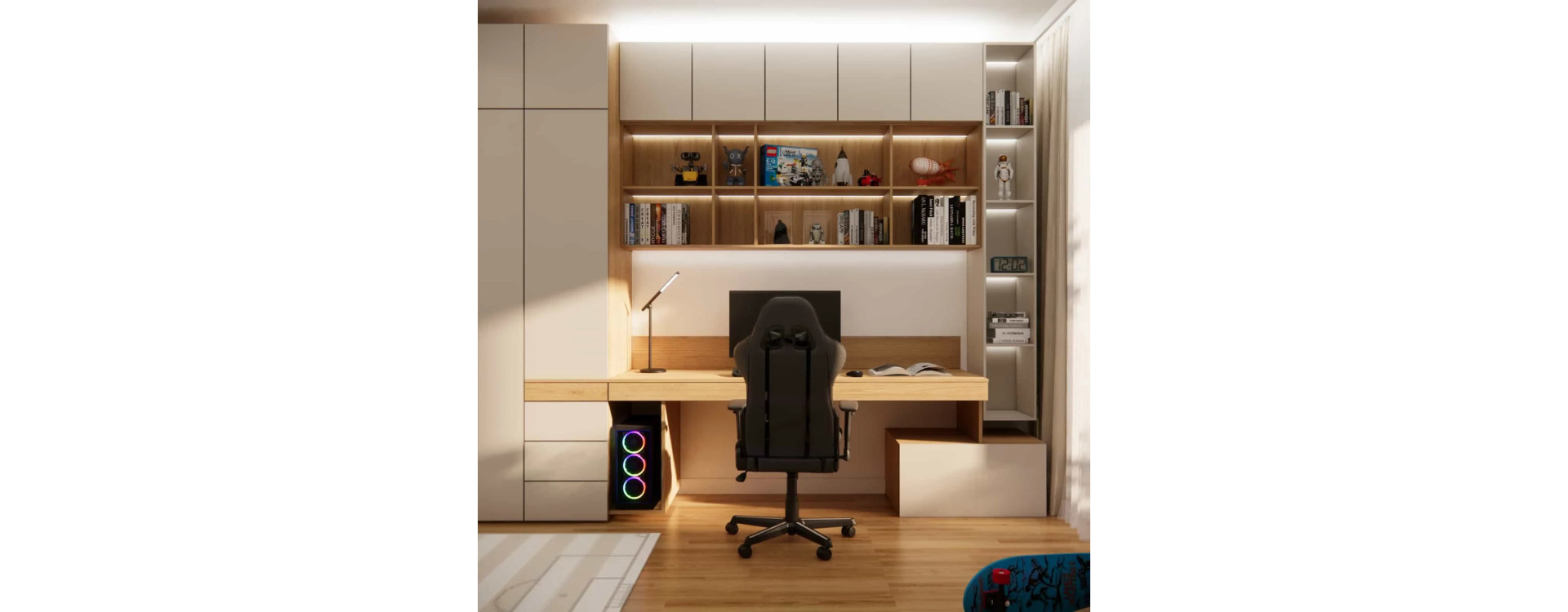
A children’s room project is always more than just aesthetics. It is an attempt to capture the passion, energy, and everyday needs of a young user in a space that is functional today and flexible for the years to come. In this project, we present a 9-year-old boy’s room interior design with an area of 17 sqm, designed in a modern, bright style with a clear division into learning, relaxation, and play zones. The football theme was introduced consciously – clearly visible, yet not overpowering the entire interior arrangement.
What you will learn from this article
- how to plan a functional interior design for a 17 sqm children’s room,
- how to combine a passion for football with a modern, calm aesthetic,
- how to separate learning, sleeping, and relaxation zones in one interior,
- what materials and finishes work best in a 9-year-old’s room,
- how we work at Fabryka Projektów and how we make design decisions.
Room analysis
The room measures 17 sqm, which provides great design comfort but also requires thoughtful organization. Our goal was to create a space that supports the child’s everyday life: learning, resting, storage, and leisure time. Another important assumption was that the design should “grow” with the user and not feel outdated after just one season.
During the analysis stage, we considered the need for ample storage, an ergonomic study area, a place to relax, and football-themed accents. We apply a similar approach in projects such as designing a room for a 9-year-old football fan, where combining function with a natural, cohesive aesthetic is key.
Concept and key interior elements
The concept is based on a bright base palette and natural wood, which warms the interior, adds coziness, and introduces a sense of order. The custom-built furniture was designed as a unified, calm structure in which storage visually “disappears,” keeping the space light and uncluttered.
The most important elements of the design:
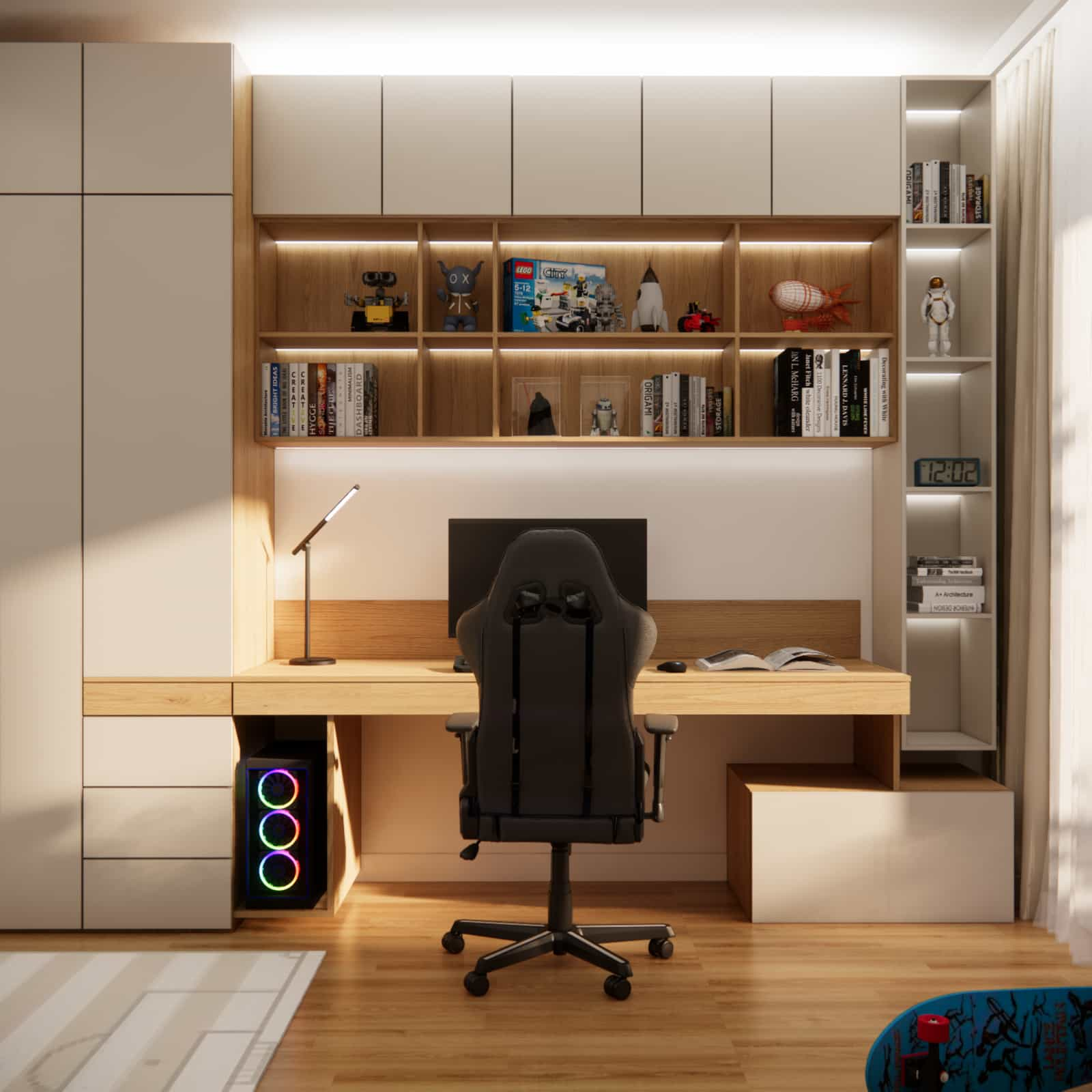
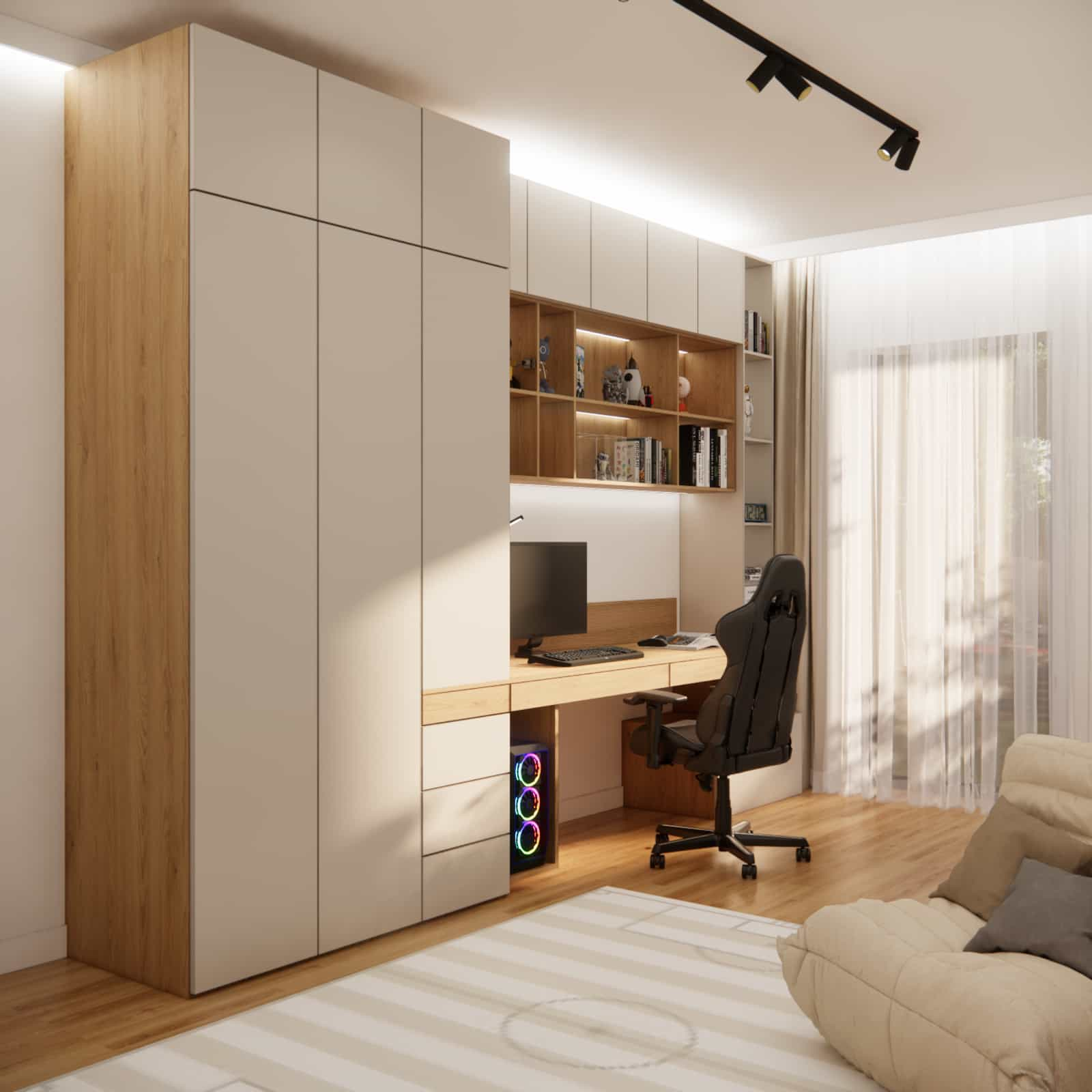
- custom-built furniture with tall wardrobes and upper cabinets – maximizing wall usage,
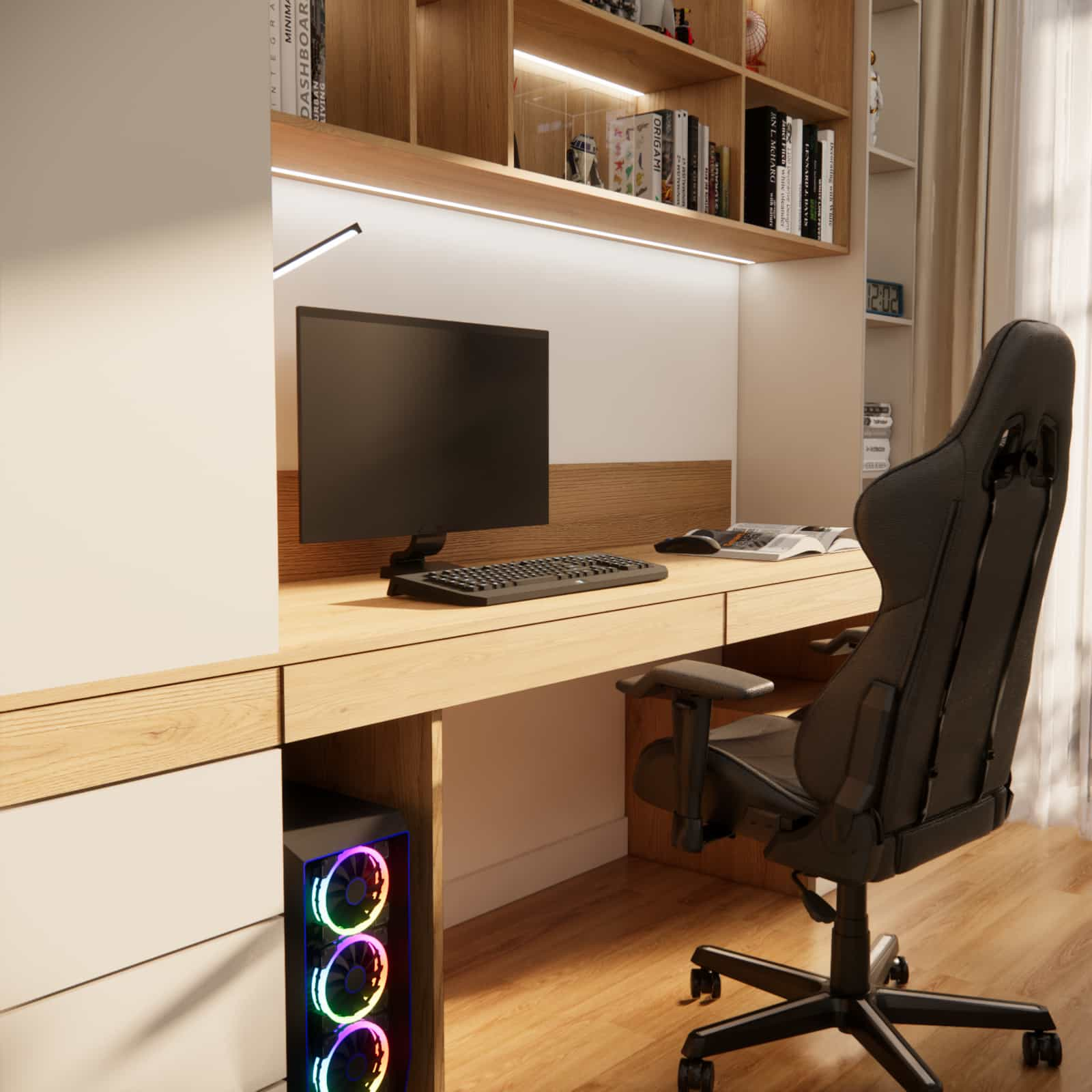
- a long desk providing comfortable workspace and room for a computer,
- open shelves with lighting serving as an exhibition zone (books, collections, decorations),
- lighting combining general, task, and decorative illumination,
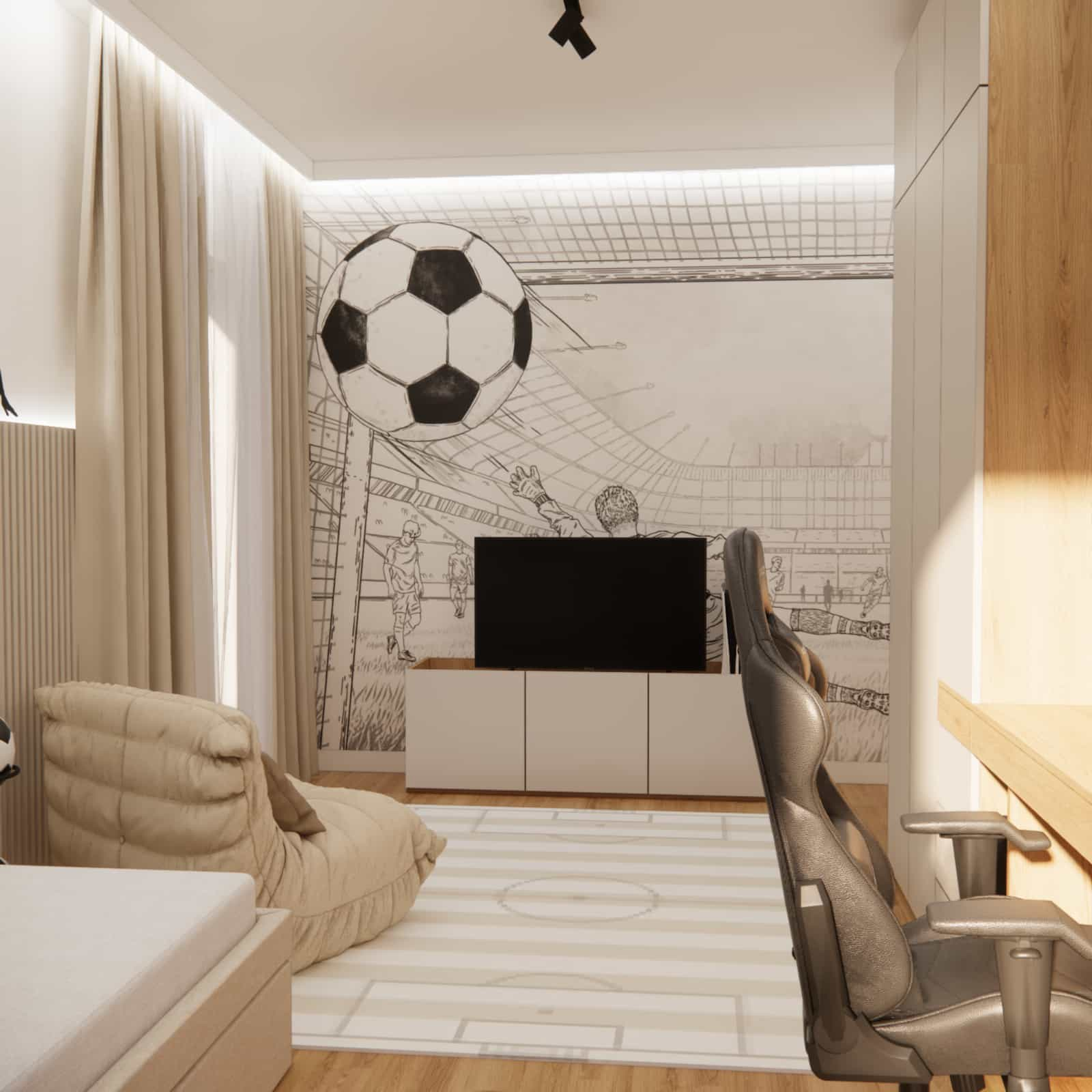
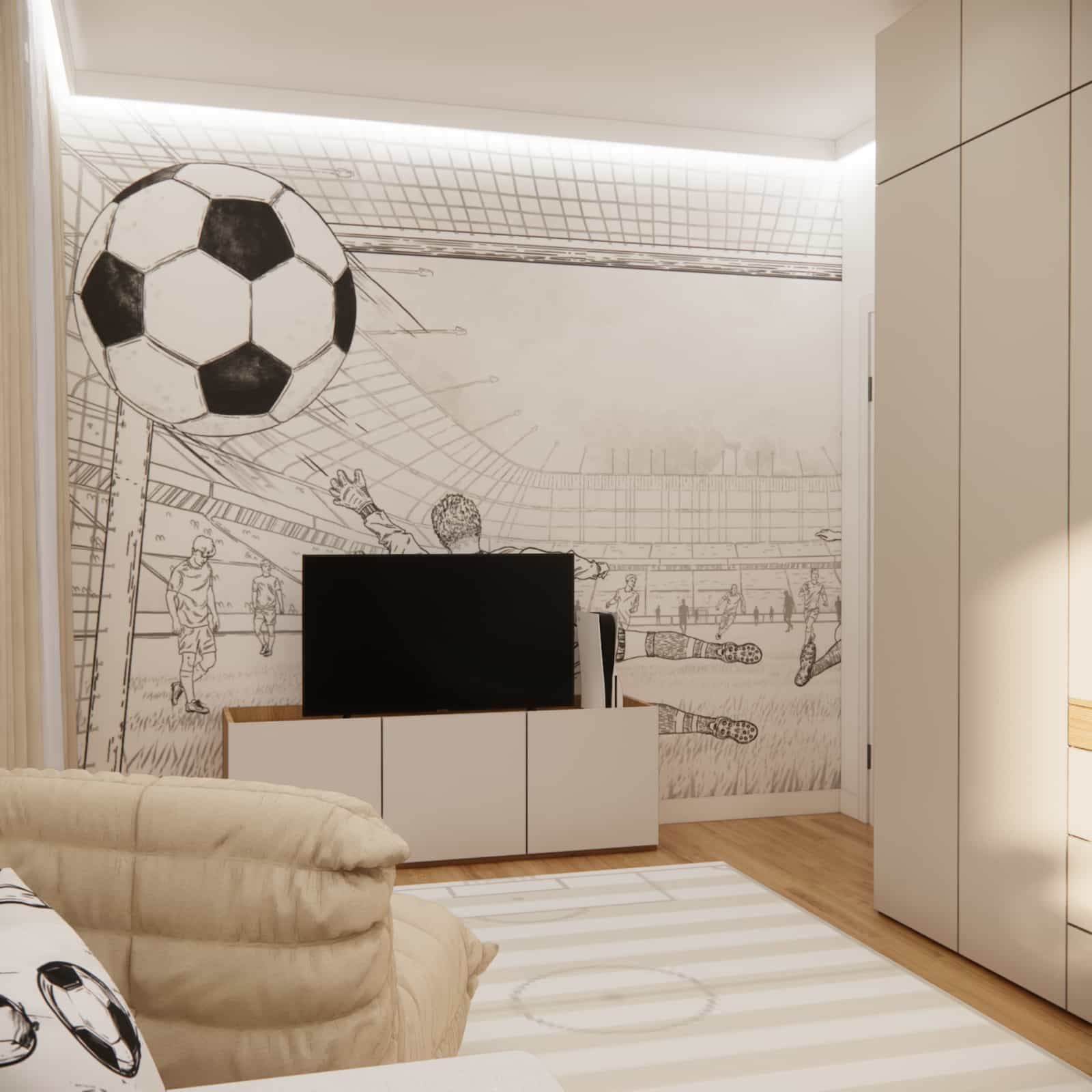
- football-themed decorations in the form of graphics and accessories, integrated into the whole.
A key focus of the project was creating a workstation that combines learning comfort with a modern character. That is why the desk zone was designed similarly to solutions such as a football-themed room for a 9-year-old with a gaming desk – with good light exposure, a comfortable worktop, and organized storage above the desk.
Functional zones
The interior was divided into zones that work intuitively in everyday use without functional conflicts:
- learning zone – desk, ergonomic chair, task lighting, and space for equipment,
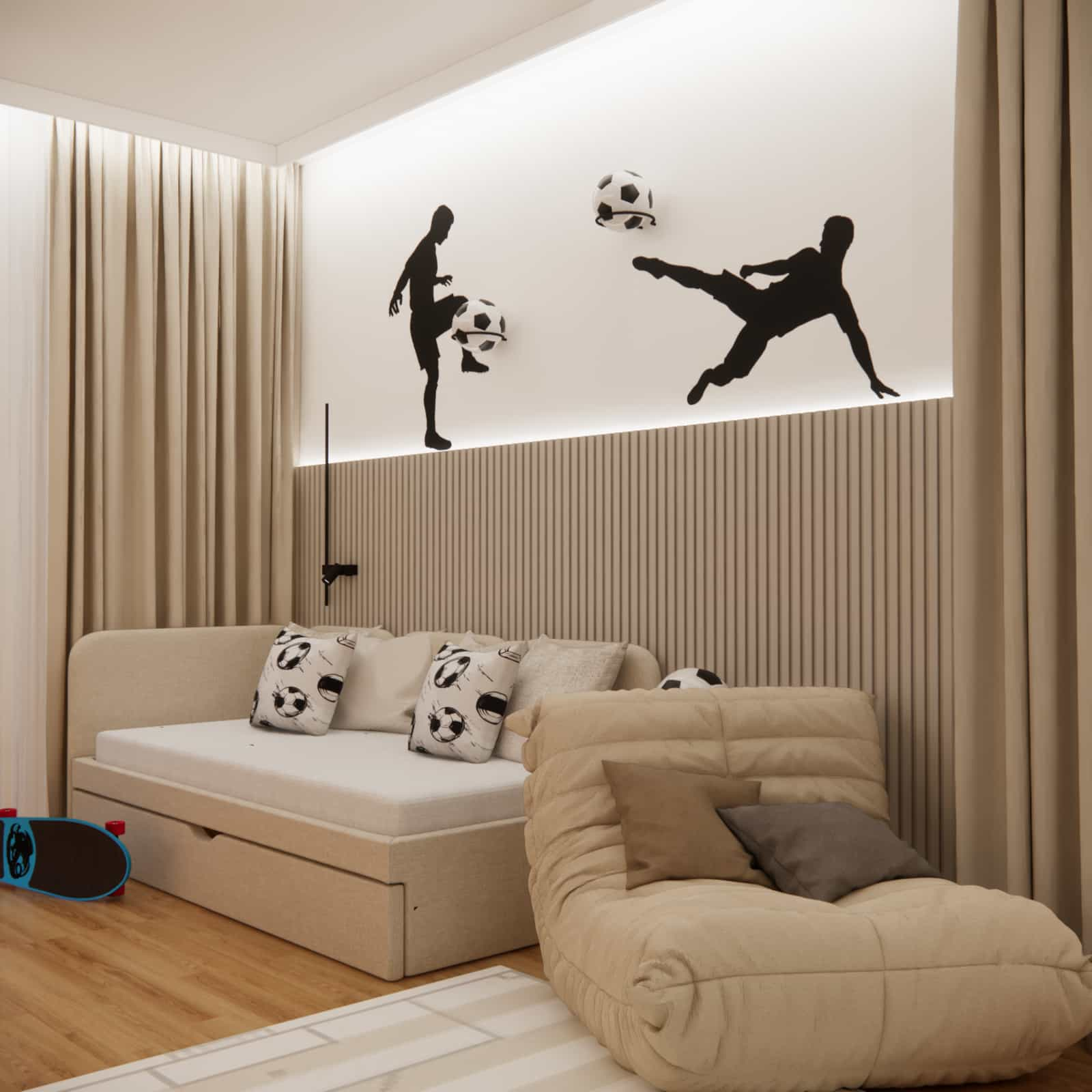
- sleeping zone – a bed positioned to ensure calmness and comfort,
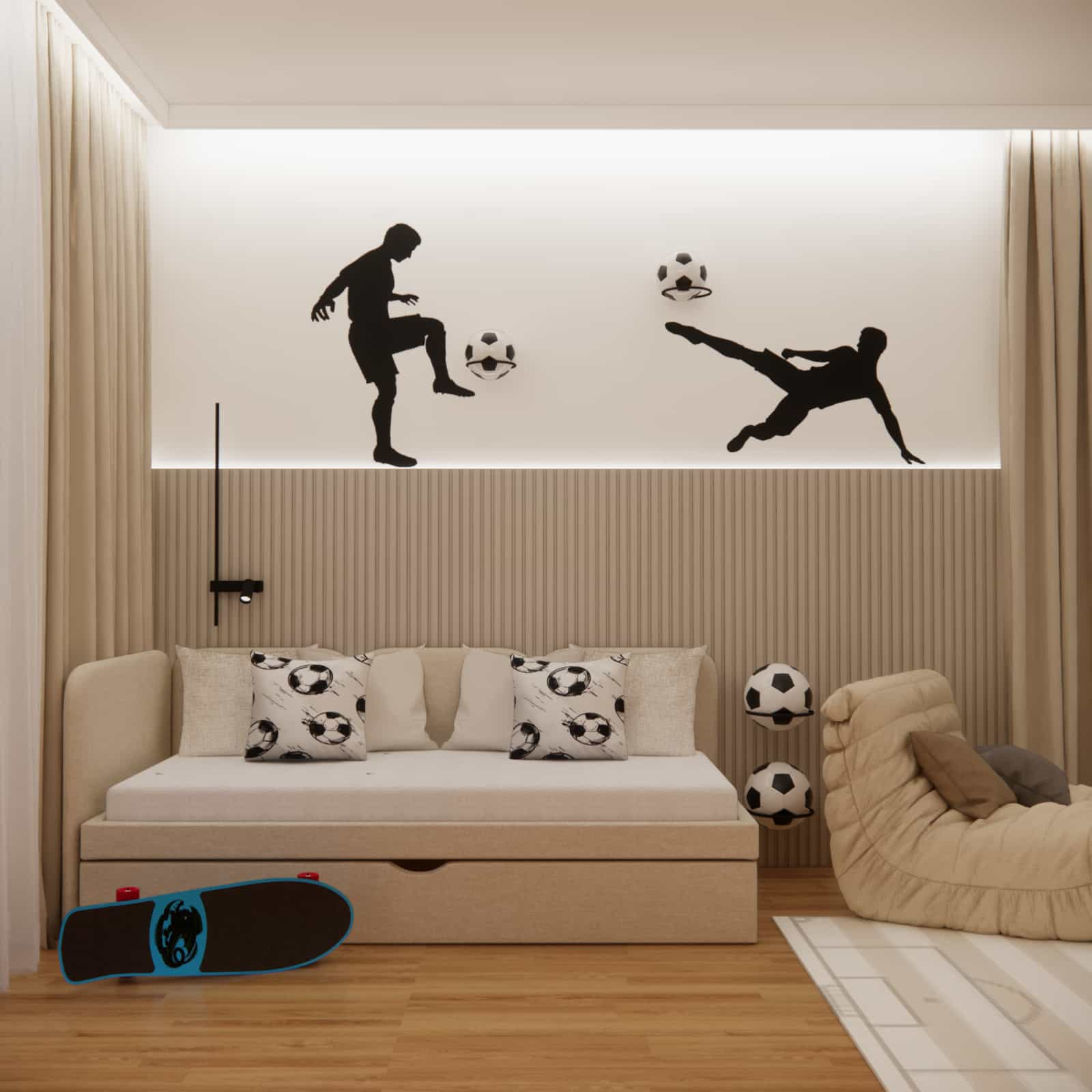
- relaxation zone – a place for rest, reading, and unwinding,
- storage zone – wardrobes, closed modules, and practical built-in solutions.
Material details
In a child’s room, we focus on durable and easy-to-maintain materials. In this interior arrangement, we used calm furniture fronts, wood-like elements, and LED lighting that enhances the functionality of the shelves and warms the overall look. Our goal was finishes that withstand daily use and retain their aesthetics over time.
Interior color scheme
The color base consists of light, warm tones (white and beige) combined with wood. This makes the interior light and pleasant to experience while providing a neutral backdrop for passion-related accents. Football elements were introduced in contrast (black, graphics) to remain readable without overwhelming the space.
Design team commentary
In this project, balance was key for us: a themed interior, but without “costume-like” design. We treated the football motif as an interior inspiration rather than a dominant decoration. Thanks to this, the room is modern, orderly, and ready for future stages – when a 9-year-old’s needs begin to change rapidly.
FAQ – 10 questions and answers
1. Is 17 sqm a good size for a child’s room?
Yes. 17 sqm allows for comfortable planning of learning, sleeping, relaxation, and storage zones without feeling cramped.
2. How can a football theme be introduced without being too literal?
It’s best to start with a neutral base and add the motif through graphics, accessories, and individual color accents.
3. Is custom-built furniture suitable for a 9-year-old’s room?
Yes, as long as it is flexible – combining closed and open modules, with shelves that can change as the child grows.
4. What lighting is most important in a child’s room?
A combination of general lighting, task lighting at the desk, and soft decorative lighting to build atmosphere in the evening.
5. How do you plan an ergonomic desk for a 9-year-old?
The key factors are proper desk height, an ergonomic (preferably adjustable) chair, and good lighting of the work area.
6. Are light colors practical in a child’s room?
Yes, if easy-to-clean materials and surfaces are chosen. A light base visually organizes and enlarges the space.
7. How can order be maintained in a room with hobbies and toys?
Built-in storage with closed modules, spacious drawers, and designated display areas help keep things tidy.
8. How can learning and entertainment zones be combined in one room?
They should be functionally separated: the desk as a calm base, with entertainment controlled through accessories, lighting, and equipment organization.
9. Will this interior design also work for an older child?
Yes. The neutral base and organized built-in furniture make it easy to change accessories and adapt the room as the child grows.
10. What does the design process at Fabryka Projektów look like?
We work remotely and in stages: we analyze needs, plan the functional layout, create the concept, and refine the design so that it is cohesive, practical, and tailored to the user.
The young footballer’s room is an example of how a themed interior design can be modern, calm, and timeless at the same time. If you are planning a child’s room arrangement or looking for interior inspiration tailored to age and passions, we invite you to contact Fabryka Projektów. See more inspirations and projects for children