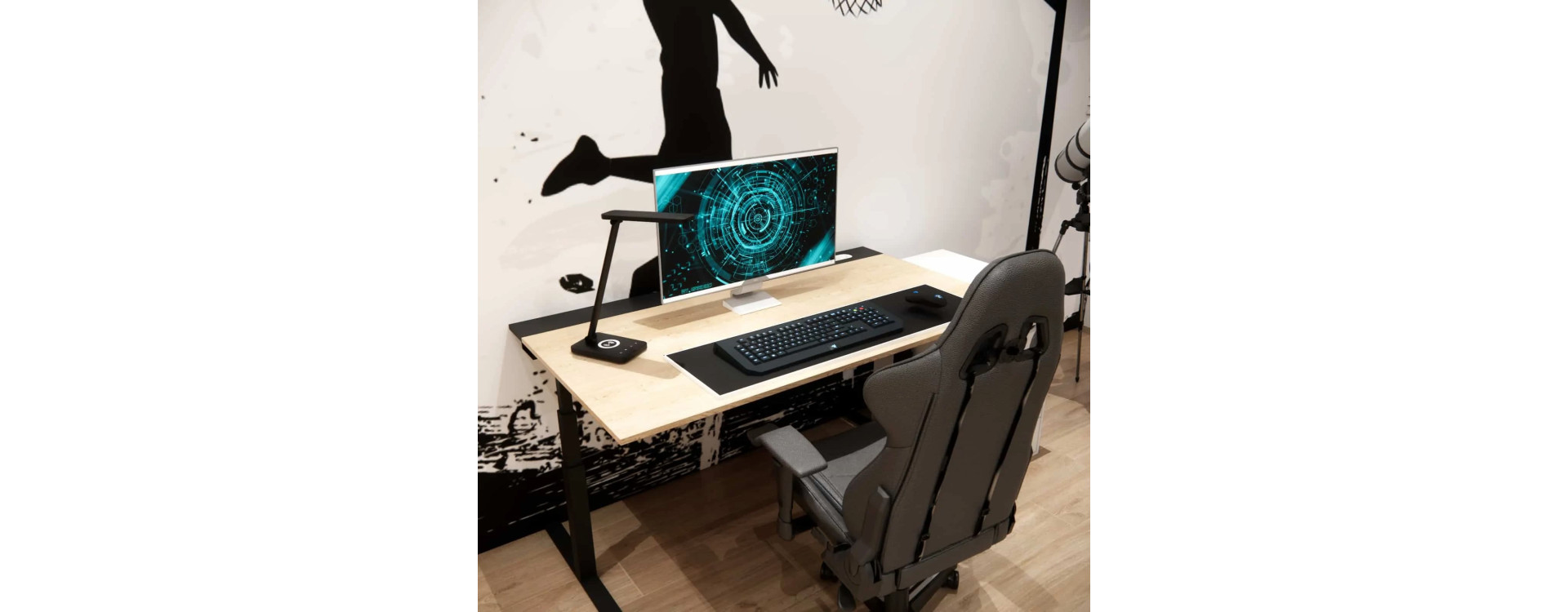
A well-designed study area in a child's room is not about a single piece of furniture, but about a thoughtful layout that genuinely supports everyday activities. In our interior design projects, we clearly see that this part of the room quickly reveals whether the space has been planned consciously. A desk placed “wherever it fits,” insufficient storage, or poorly selected lighting can quickly affect learning comfort and overall organization.
If you are looking for practical solutions and real-life examples, see also: Study Area in a Child's Room – 10 Proven Inspirations from Interior Design Projects.
What You Will Learn from This Article
- how to plan a study area step by step,
- how to choose a desk based on your child's age and height,
- where to place a desk in a child's room,
- how to plan effective study lighting,
- how to avoid the most common design mistakes.
Step 1: Identify Your Child's Needs and How the Desk Will Be Used
The first step should always be determining what the study area will actually be used for. A young child who mainly draws and completes short homework assignments has different needs than a teenager who spends several hours a day working on a computer.
At this stage, we analyze the child's age, height, the amount of school materials they use, and whether the desk will also serve as a space for hobbies or computer work.

Step 2: Choose the Right Location for the Desk
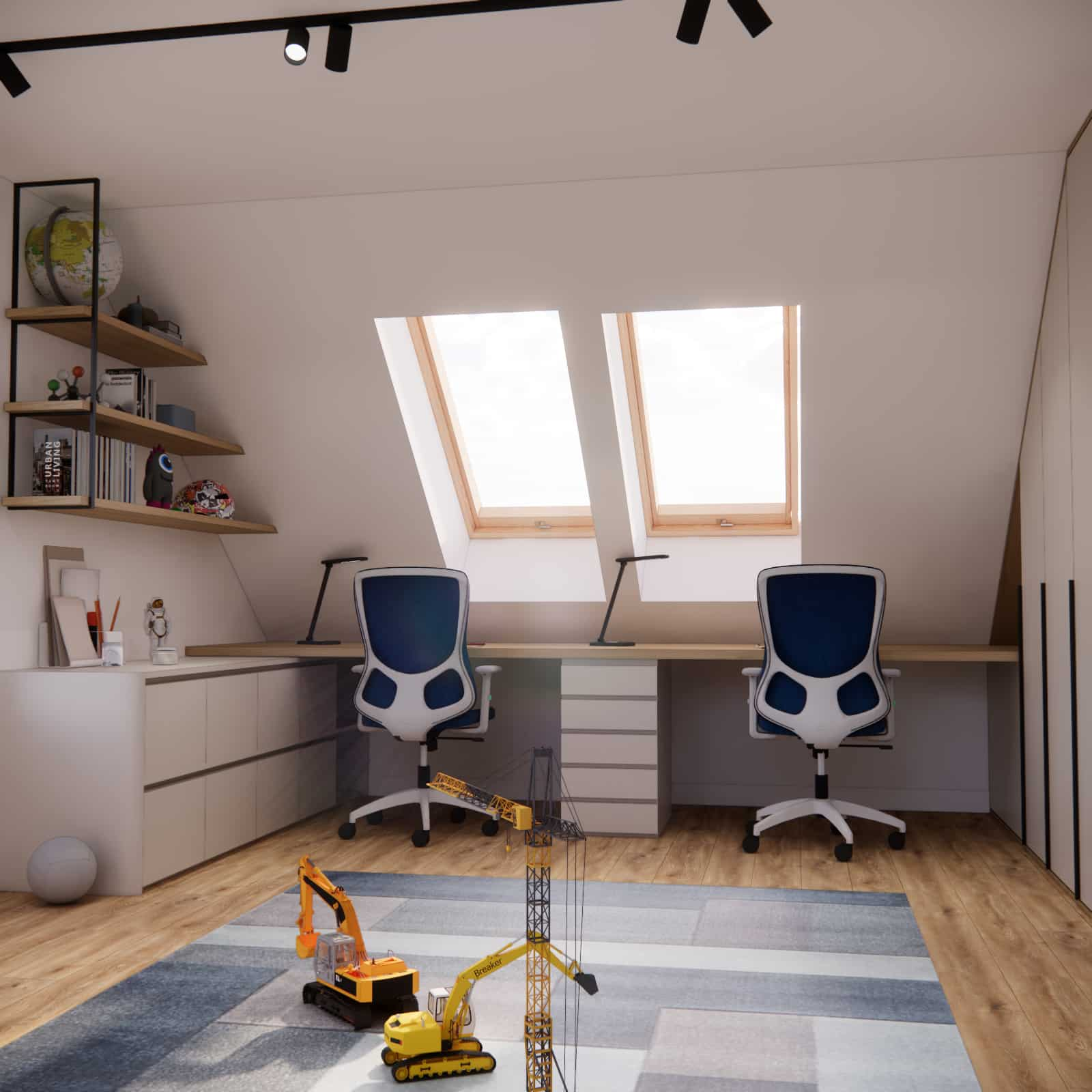
The placement of a desk has a significant impact on learning comfort. The best solution is positioning it near a window to maximize natural daylight. If this is not possible, proper artificial lighting becomes essential.
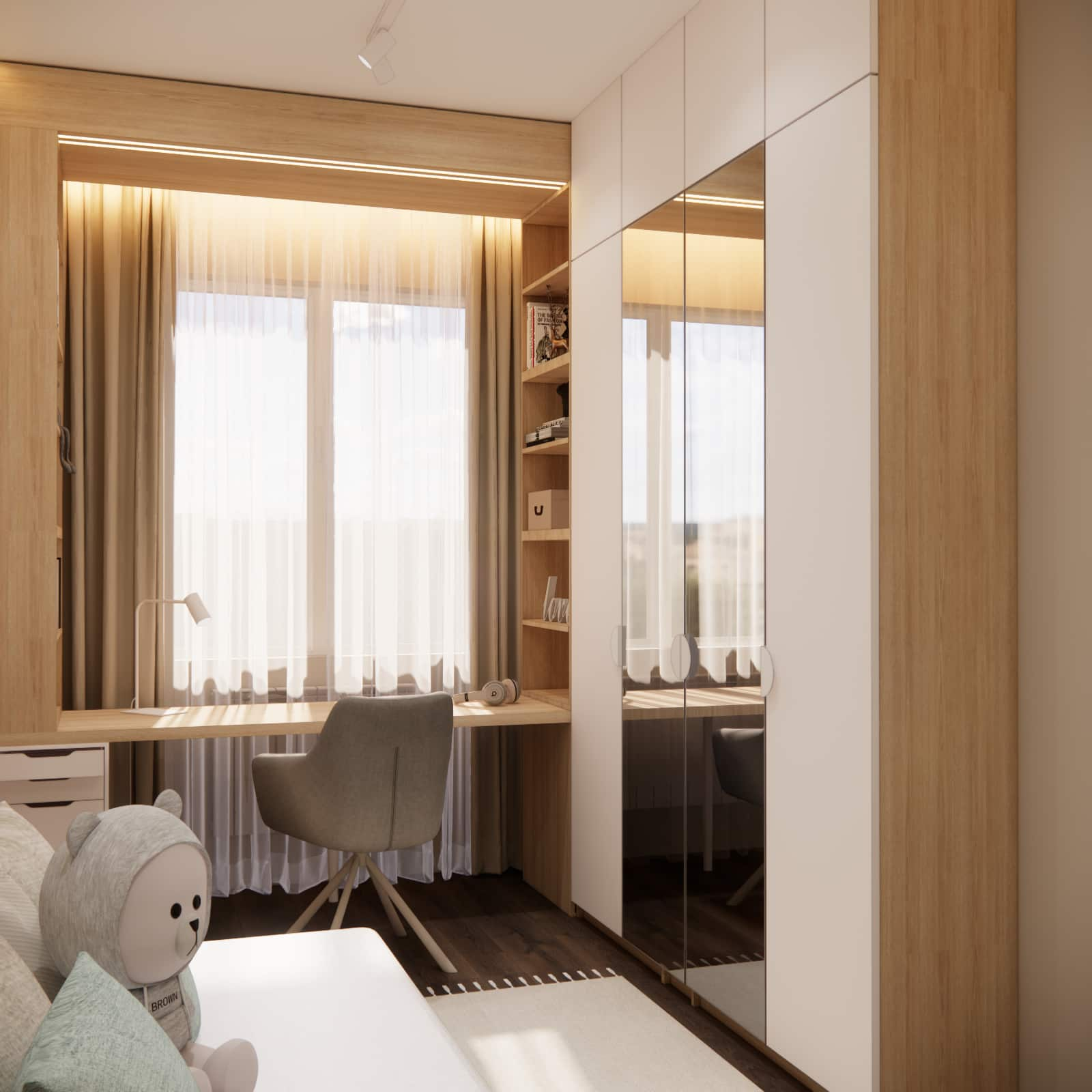
Different desk placement options – by a window, in a corner, or under a sloped ceiling – are presented in the article: Study Area in a Child's Room – 10 Design Inspirations.
Step 3: Choose a Desk Suitable for Your Child's Age and Height
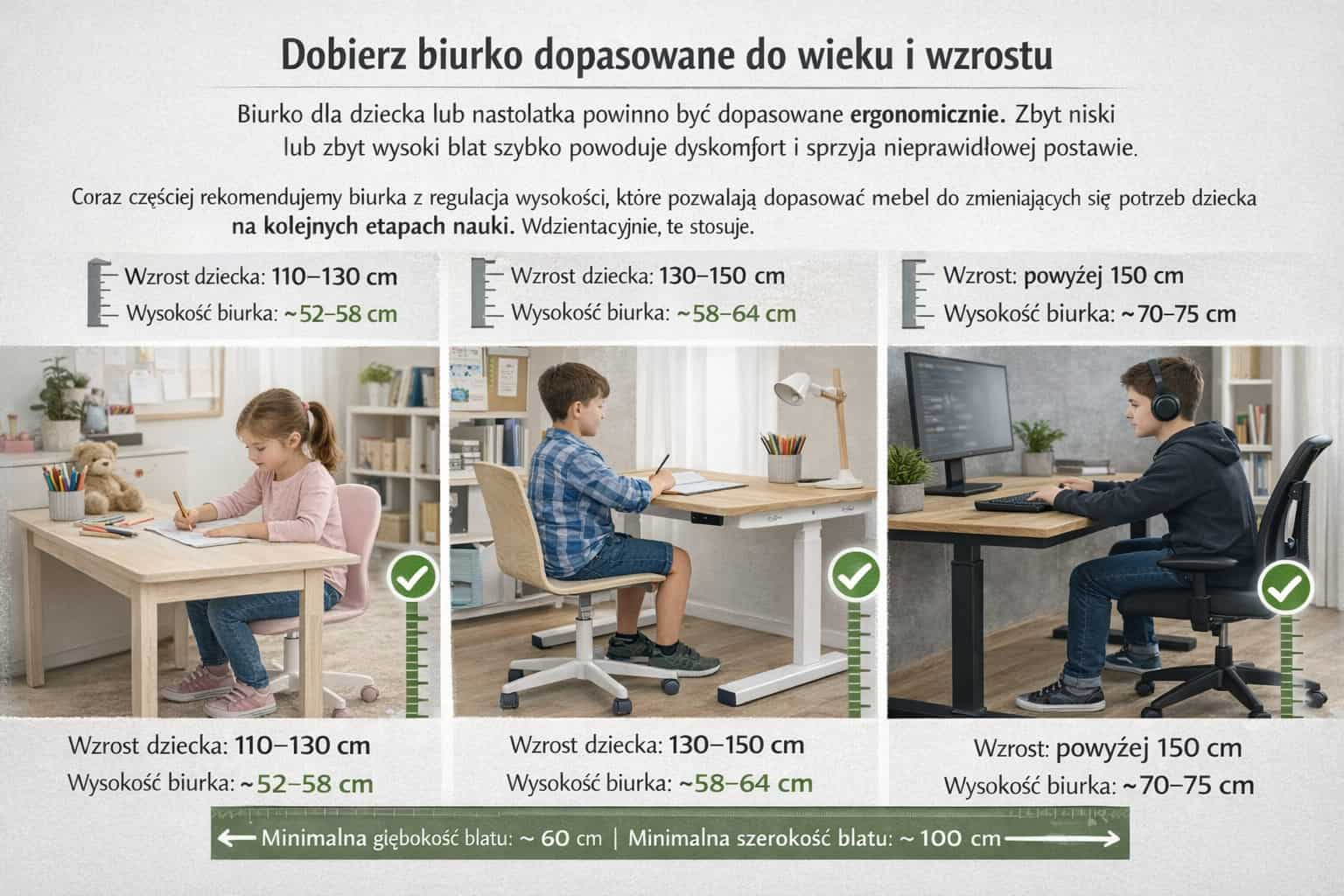
A desk for a child or teenager should be ergonomically fitted. A desk that is too low or too high can quickly cause discomfort and encourage poor posture. Increasingly, we recommend height-adjustable desks, which can adapt to a child's changing needs throughout different stages of development.
As a general rule, the desk height should allow the forearms to rest comfortably with elbows bent at a 90-degree angle, while the feet should rest firmly on the floor. As a guideline:
- for children between 110–130 cm (3'7"–4'3") tall, the desk height should be approximately 52–58 cm,
- for children between 130–150 cm (4'3"–4'11") tall, approximately 58–64 cm,
- for teenagers over 150 cm (4'11"), approximately 70–75 cm.
The minimum recommended desk depth is approximately 60 cm, while the width should allow books and notebooks to be spread out comfortably, especially when studying with a computer. Proper desk dimensions directly affect comfort, concentration, and spinal health.
Step 4: Plan Ergonomics and Comfortable Seating
Even the best-designed study area will not work properly without a suitable chair. The chair should offer adjustable height and proper back support. The chair height should always be adjusted to the desk height, not the other way around.
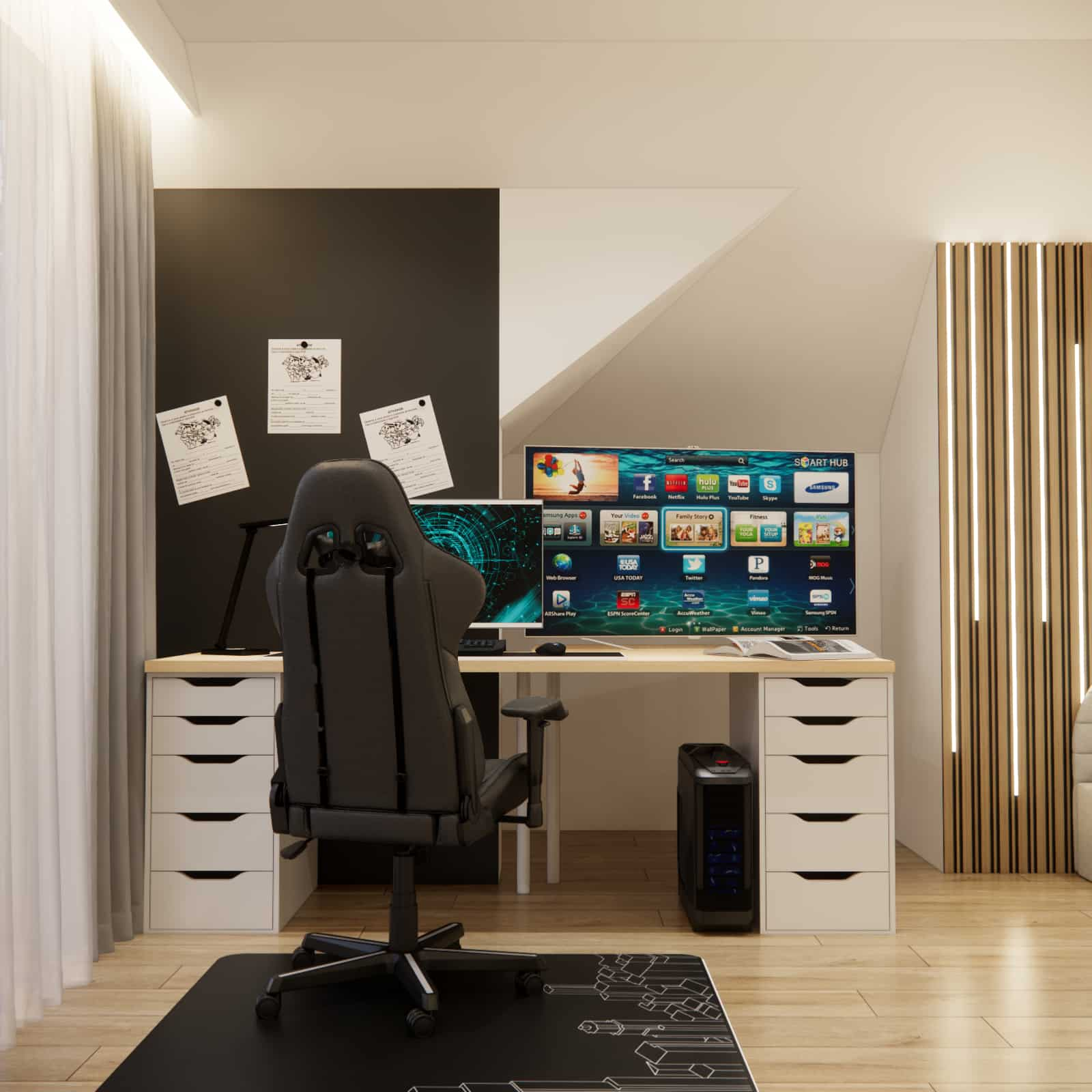
Step 5: Study Area Lighting – Light Matters
Proper lighting is one of the most commonly overlooked elements. In addition to general room lighting, a task lamp is essential and should be positioned to avoid casting shadows on the work surface.
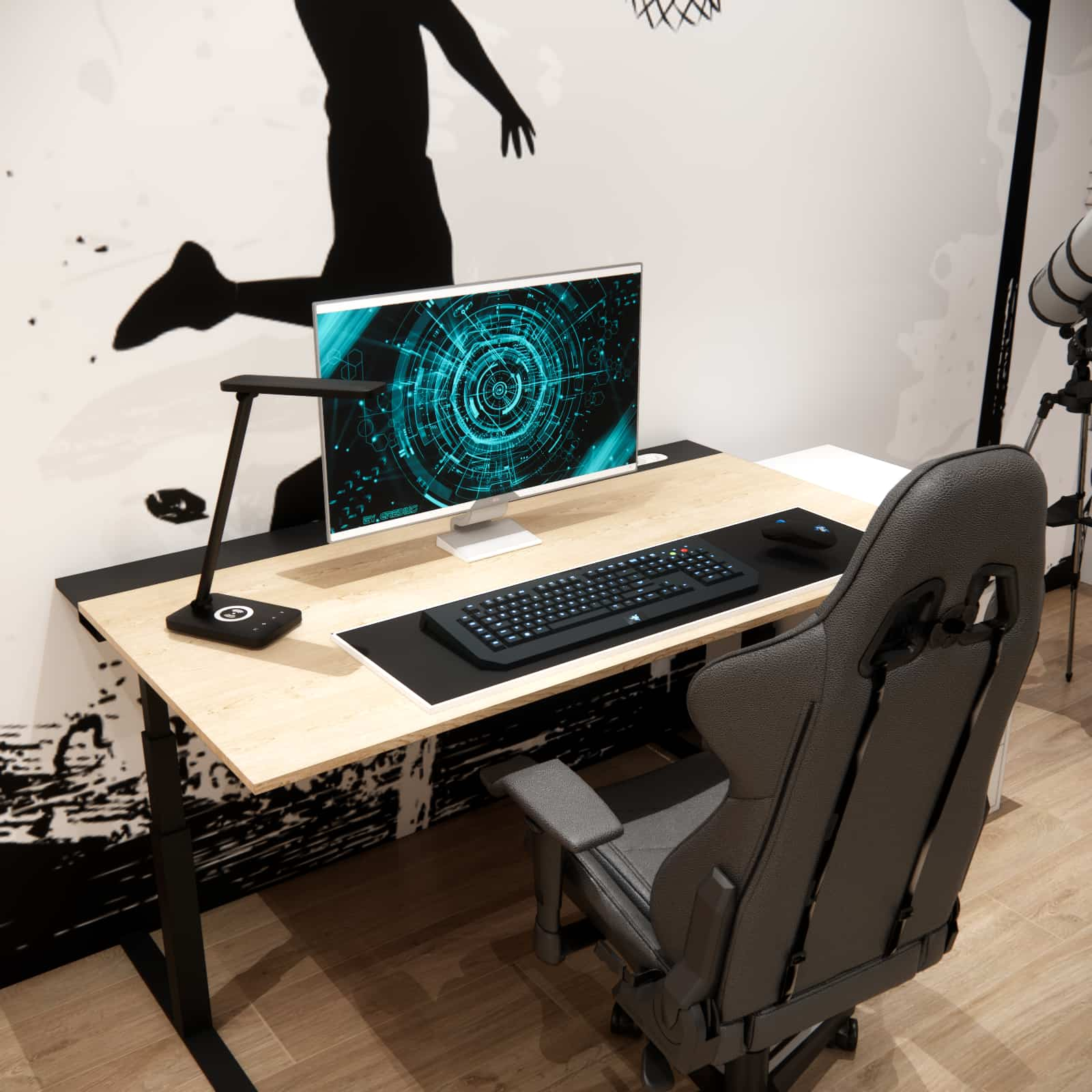
Step 6: Plan Storage Around the Desk
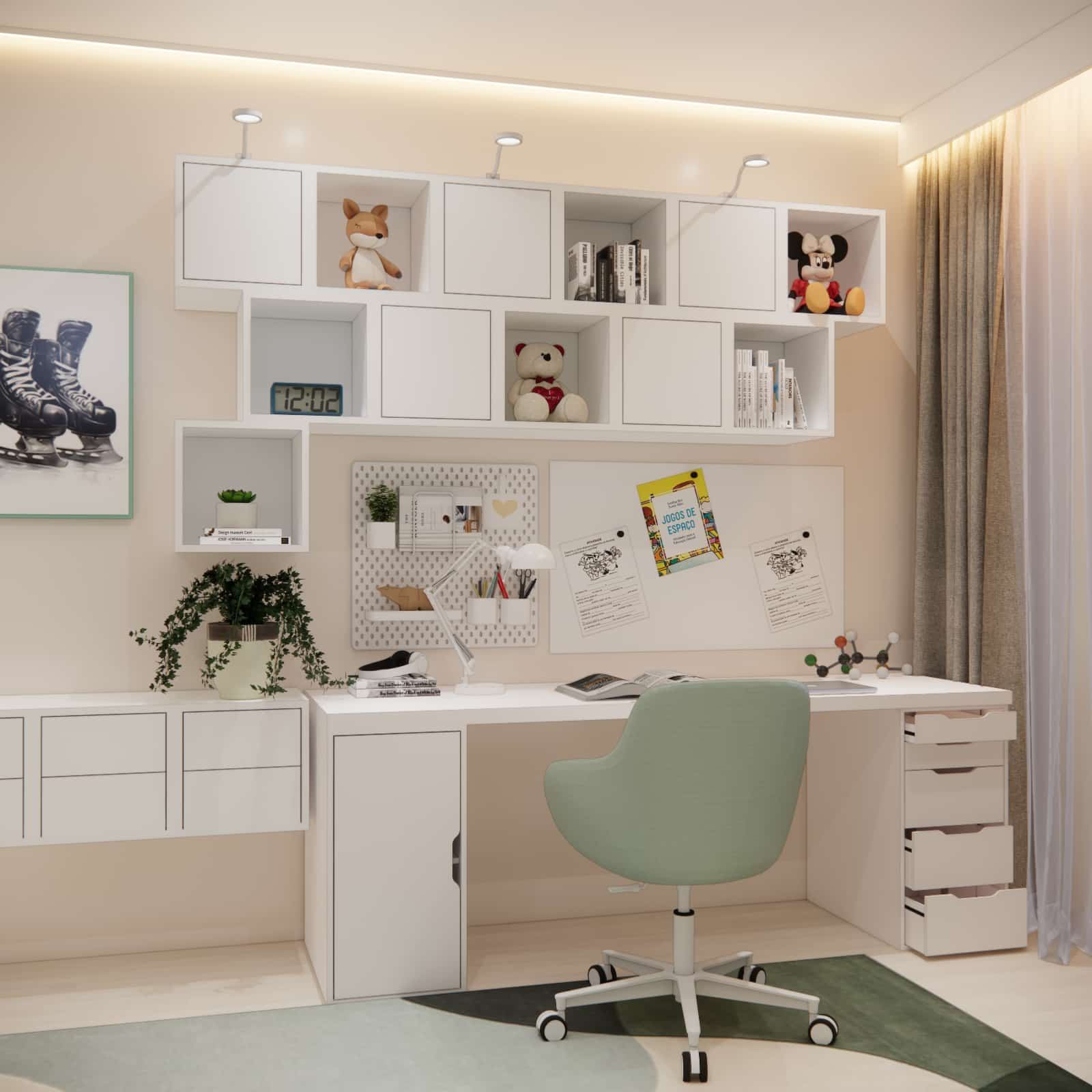
A functional child's room is one where everything has its place. Near the study area, drawers, shelves, or closed cabinets are essential for quickly storing school materials after study time.
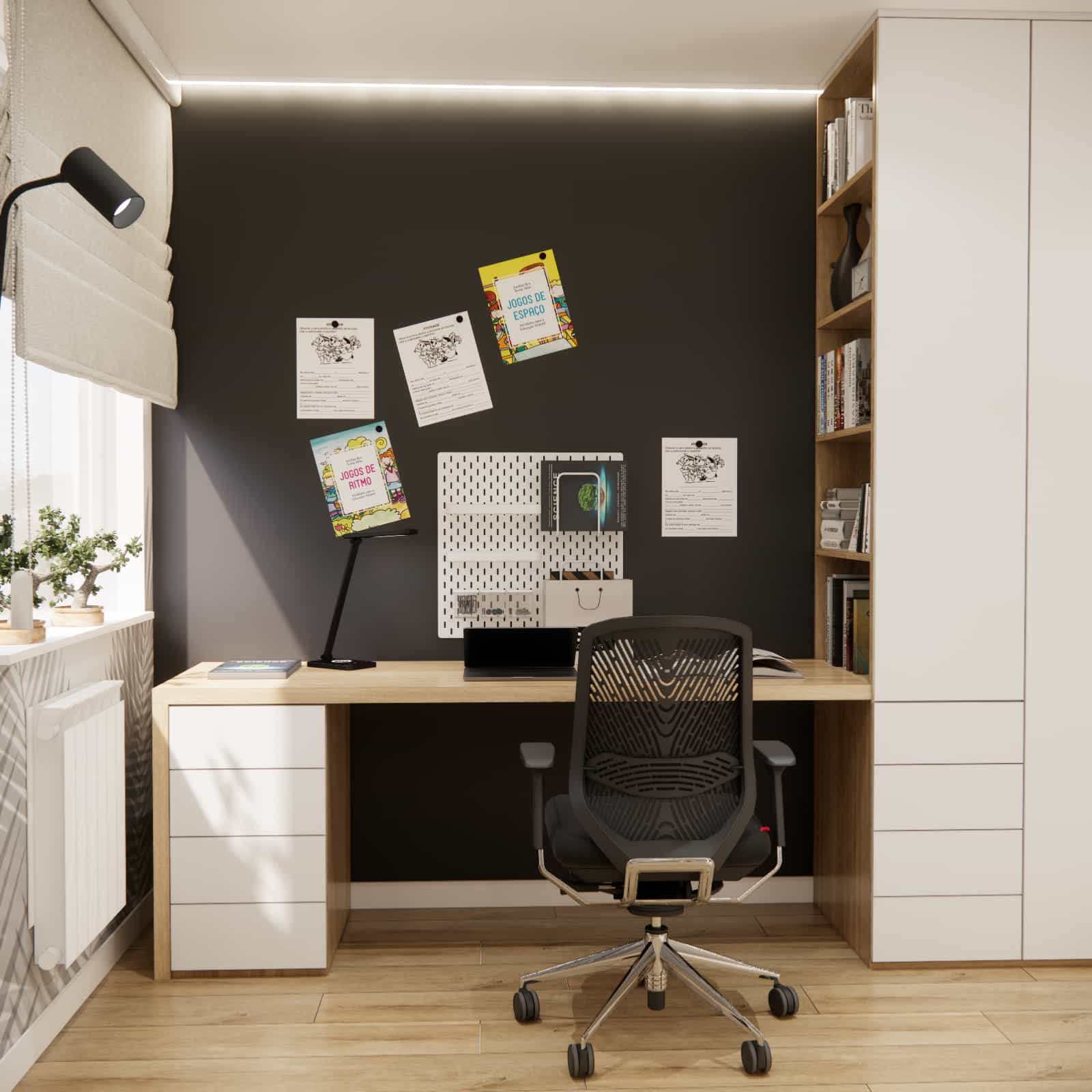
Step 7: Visually Define the Study Area
A change in wall color, decorative wall panels, or custom furniture can help visually separate the study area from the rest of the room. Examples of such solutions can be found in the article: Study Area in a Child's Room – 10 Proven Inspirations.
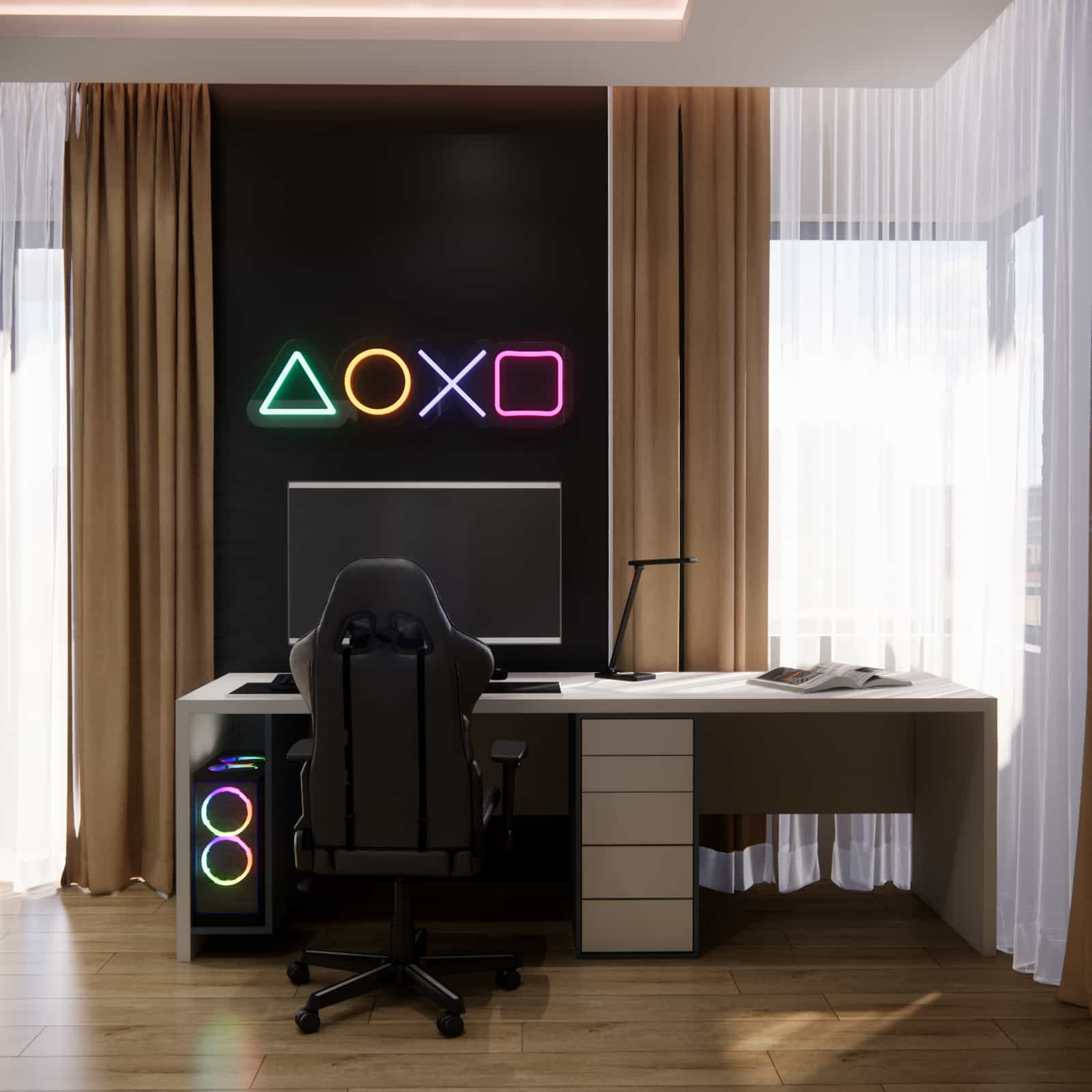
Step 8: Plan a Study Area That Will Last for Years
A child's room design with a desk should be approached with a long-term perspective. A neutral color palette and flexible furniture make it easy to adapt the room to future stages of the child's development.
Summary
A well-designed study area influences not only learning comfort but also the organization and functionality of the entire child's room. If you would like to see real-life examples from our projects, visit: Study Area in a Child's Room – 10 Proven Inspirations from Interior Design Projects.
FAQ – Frequently Asked Questions

1. How do you plan a study area in a child's room?
The key elements are ergonomics, proper lighting, and functional storage. The study area should be tailored to the child's age and daily habits.
2. Where is the best place to position a desk in a child's room?
Ideally near a window to maximize natural daylight. If that is not possible, good artificial lighting and a calm background behind the desk are essential.
3. What size should a child's desk be?
The minimum recommended desk depth is approximately 60 cm. The width should be adjusted to the child's needs – the more books, materials, and equipment used, the larger the desk should be.
4. Is a height-adjustable desk worth it?
Yes. It allows the desk to be adapted to the child's growth and can be used comfortably for many years.
5. What type of chair is best for a child's desk?
The chair should have adjustable height and proper back support. It is important to match the chair to the desk height.
6. How should study area lighting be planned?
In addition to general room lighting, a task lamp is essential and should be positioned to prevent shadows on the desktop.
7. How can you keep a study area organized?
Drawers and shelves located near the desk work best, along with dividing storage into frequently used and occasional items.
8. How can a study area be created in a small child's room?
A simple visual separation can be enough – a different wall color, decorative panels, or built-in furniture.
9. Is a study area under a sloped ceiling practical?
Yes, provided there is sufficient headroom in the seating area and adequate lighting.
10. How do you create a study area that grows with your child?
The best approach is a neutral design base, flexible furniture, and accessories that can be easily updated without replacing the entire setup.