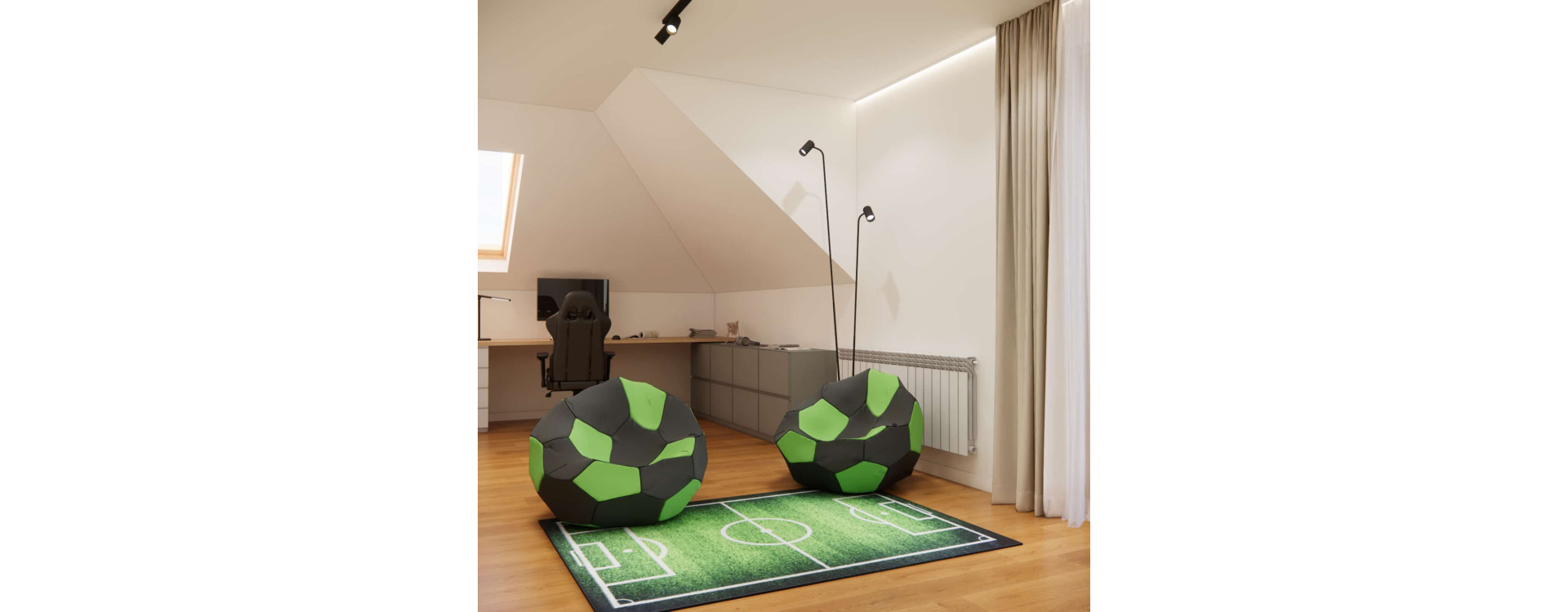
The relaxation zone in a child’s room is now much more than just a bed and a few pillows. It is a place where a child can calm down, read, play peacefully, listen to music, or simply rest after an intense day. In our projects, we increasingly treat it as one of the most important parts of both children’s and teenagers’ rooms.
We prepared this article for parents who are planning to create a cozy children’s room and are looking for specific inspirations based on real visualizations. We show what a relaxation corner for a child can look like, how to create a chillout area in a child’s room, and how to design a modern children’s room with a relaxation zone — both for younger children and teenagers.
We base our work on design experience and solutions that we use in everyday interior projects. We pay attention not only to aesthetics, but also to functionality, comfort, lighting, materials, and adapting the room to the child’s age and interests.
Why is it worth planning a relaxation zone in a child’s room?
A well-designed relaxation zone in a child’s room helps create an interior that is not only visually appealing, but also genuinely comfortable. A child needs space for learning, playing, and storage, but it is equally important to have a place where they can relax without too many stimuli.
In practice, such a zone can take many forms. Sometimes it will be a soft bed with an upholstered headboard, sometimes a sofa for a child’s room, and in other projects a window seat, a mezzanine, an armchair, poufs, or a reading corner for a child.
Most common misconceptions
- A relaxation zone must take up a lot of space.
- It is impossible to create a comfortable space in a small room.
- A bed is only for sleeping.
- The more decorations, the cozier the interior.
- A child’s room should be very colorful.
- One ceiling lamp is enough for the entire room.
How do we make design decisions?
When designing a child’s room with a relaxation area, we first analyze the child’s daily needs. We determine whether the room should focus more on calming down, playing, or developing hobbies. Only then do we select furniture, colors, materials, and lighting.
The best effect comes from combining a functional layout, soft fabrics, calm colors, and well-planned lighting. These are the elements that make a relaxation zone in a child’s room comfortable and durable.
1. A soft bed as the center of the relaxation zone
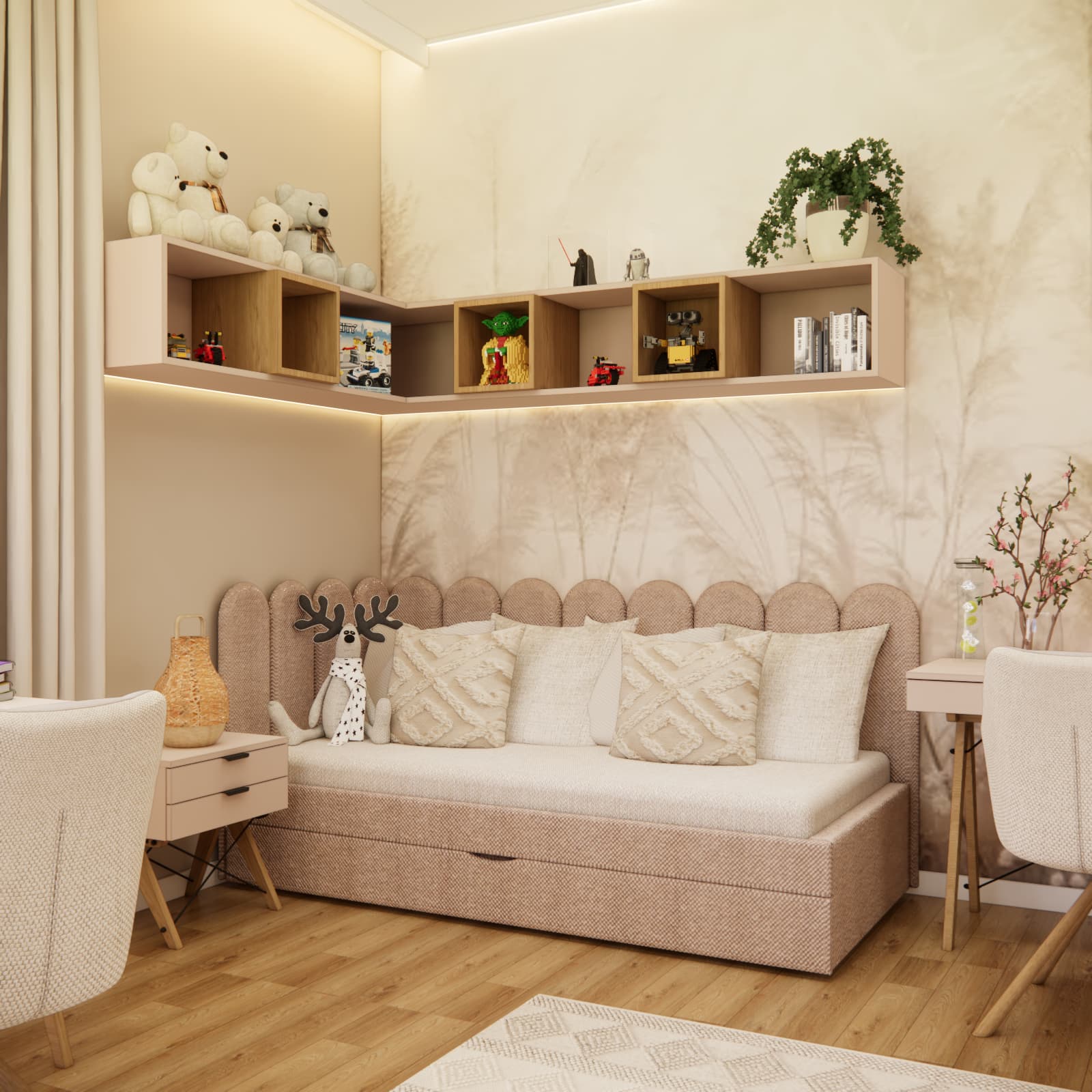
One of the simplest ways to create a cozy relaxation zone for a child is to use the bed as a multifunctional place for rest. An upholstered headboard, soft pillows, and pleasant fabrics make the bed serve as a sofa, reading spot, and peaceful play area.
In this type of solution, the background plays an important role. Delicate wallpaper, soft LED lighting, and light colors create a calm atmosphere that does not overwhelm the interior.
2. A children’s room with fantasy wallpaper and a relaxation area
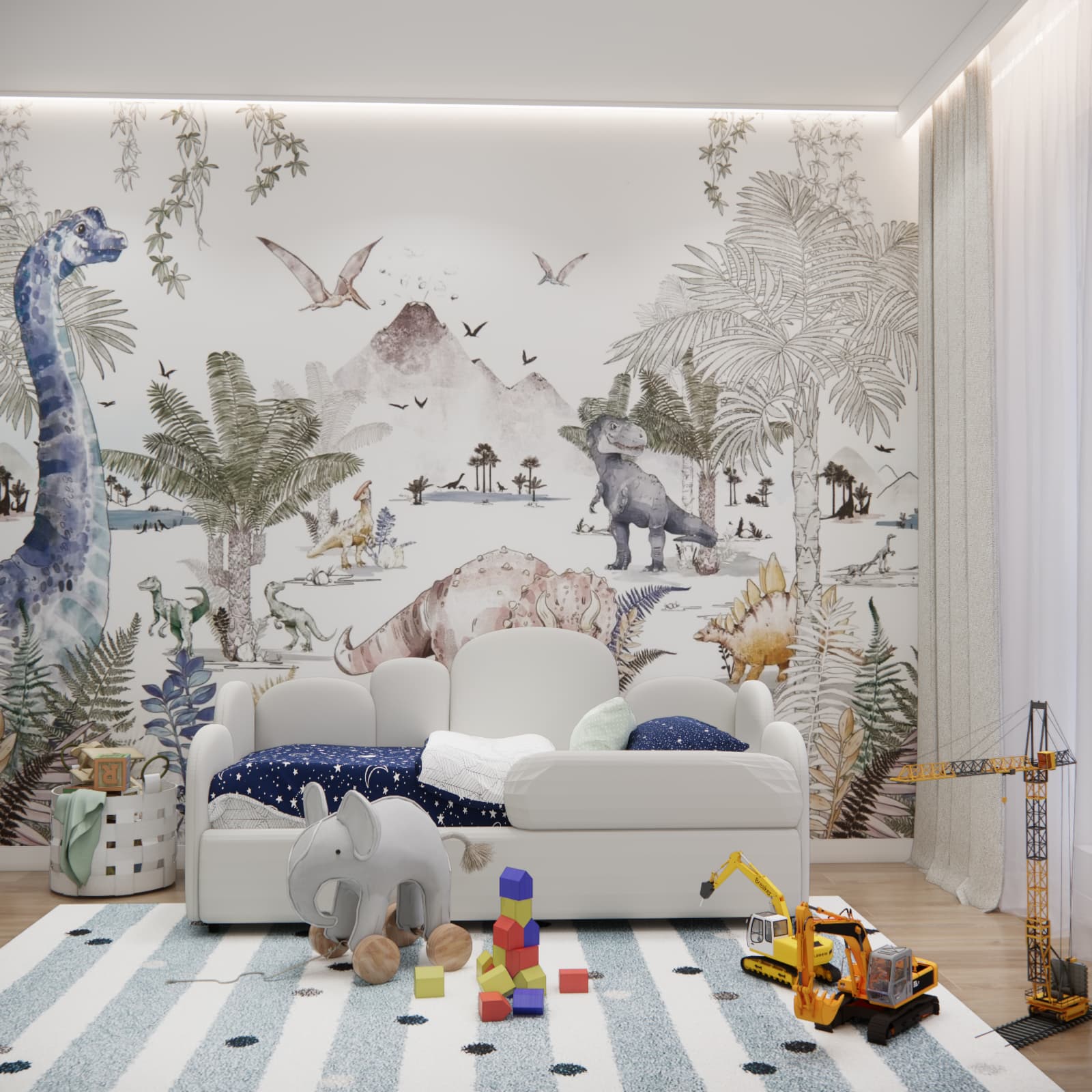
In a younger child’s room, the relaxation zone can combine rest with imagination. Dinosaur-themed wallpaper, a soft bed, and a rug create a space that encourages play while also providing a sense of safety.
This is a great idea for a relaxation zone in a child’s room if the child enjoys themed interiors. However, it is important to balance a strong decorative motif with simple furniture and a calm color palette.
3. A chillout zone for a young football fan
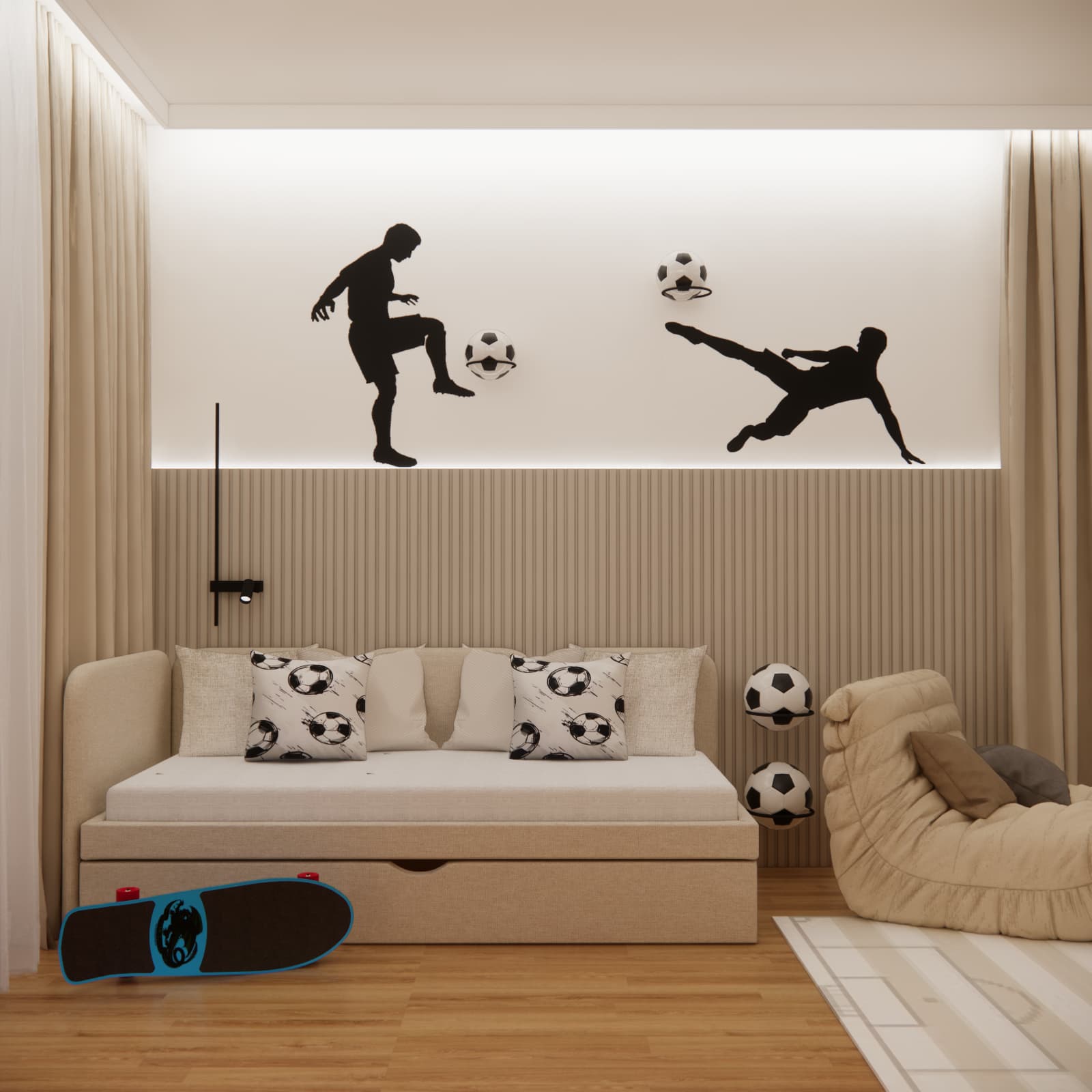
A modern relaxation zone for a boy can subtly reference his interests. Football motifs, illuminated walls, and an upholstered bed create a dynamic yet organized interior.
In this project, the sporty character of the room does not dominate the entire arrangement. Thanks to neutral colors and soft materials, the room remains comfortable and cozy.
4. A bright relaxation zone with natural light
A child’s room with a window seat or a bed placed close to natural light creates a very pleasant atmosphere. This type of arrangement works especially well when we want to create a place for reading, relaxing, and calm play.
In this project, we used warm beige tones, soft curtains, and delicate decorations. As a result, the interior feels light, calm, and timeless.
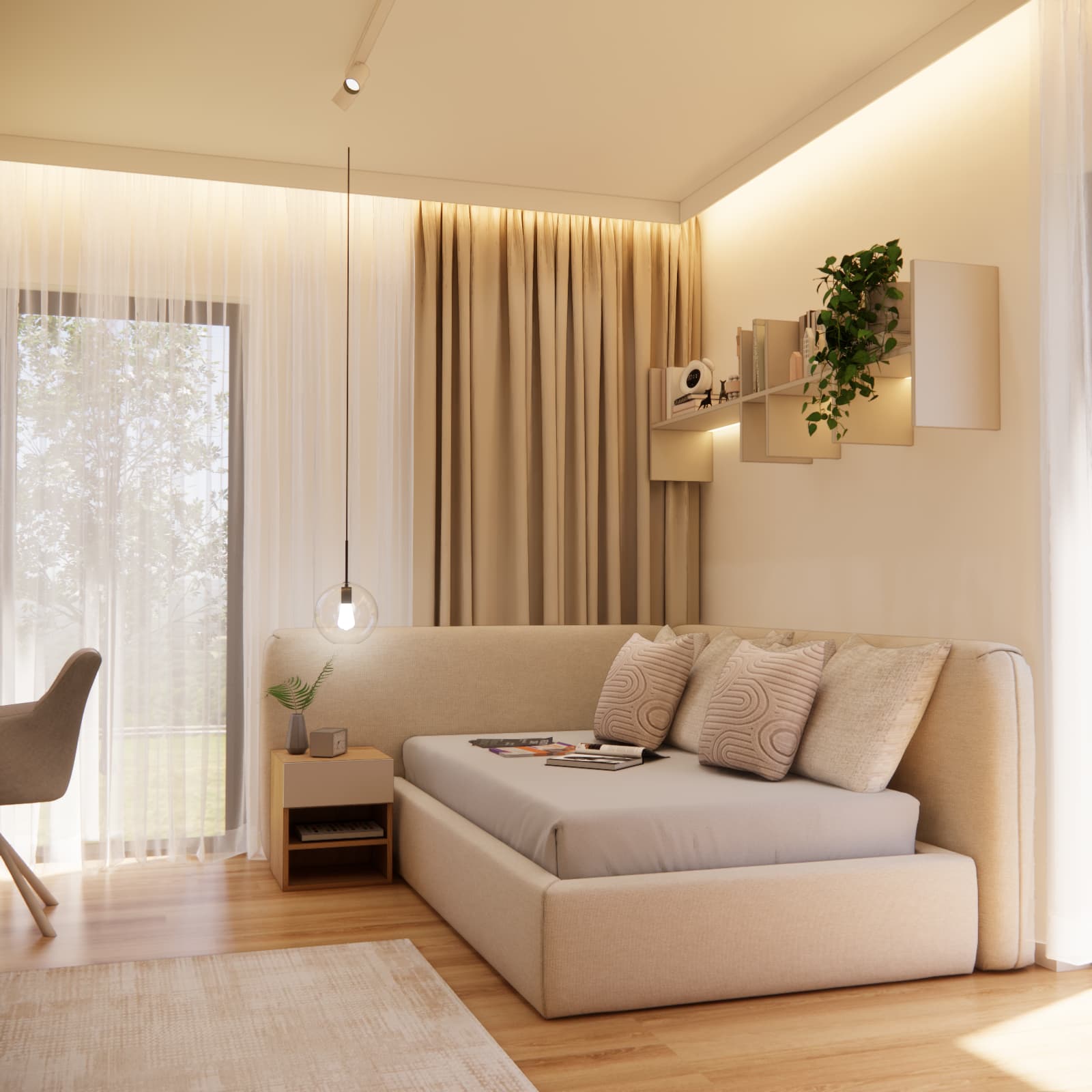
5. A relaxation corner with shelves and space for books
A soft reading corner in a child’s room does not always require an additional armchair. Sometimes a comfortable bed, an upholstered wall, and shelves above the relaxation zone are enough.
This solution works especially well in teenagers’ rooms. It combines sleeping, relaxing, and storage functions without taking up additional space.
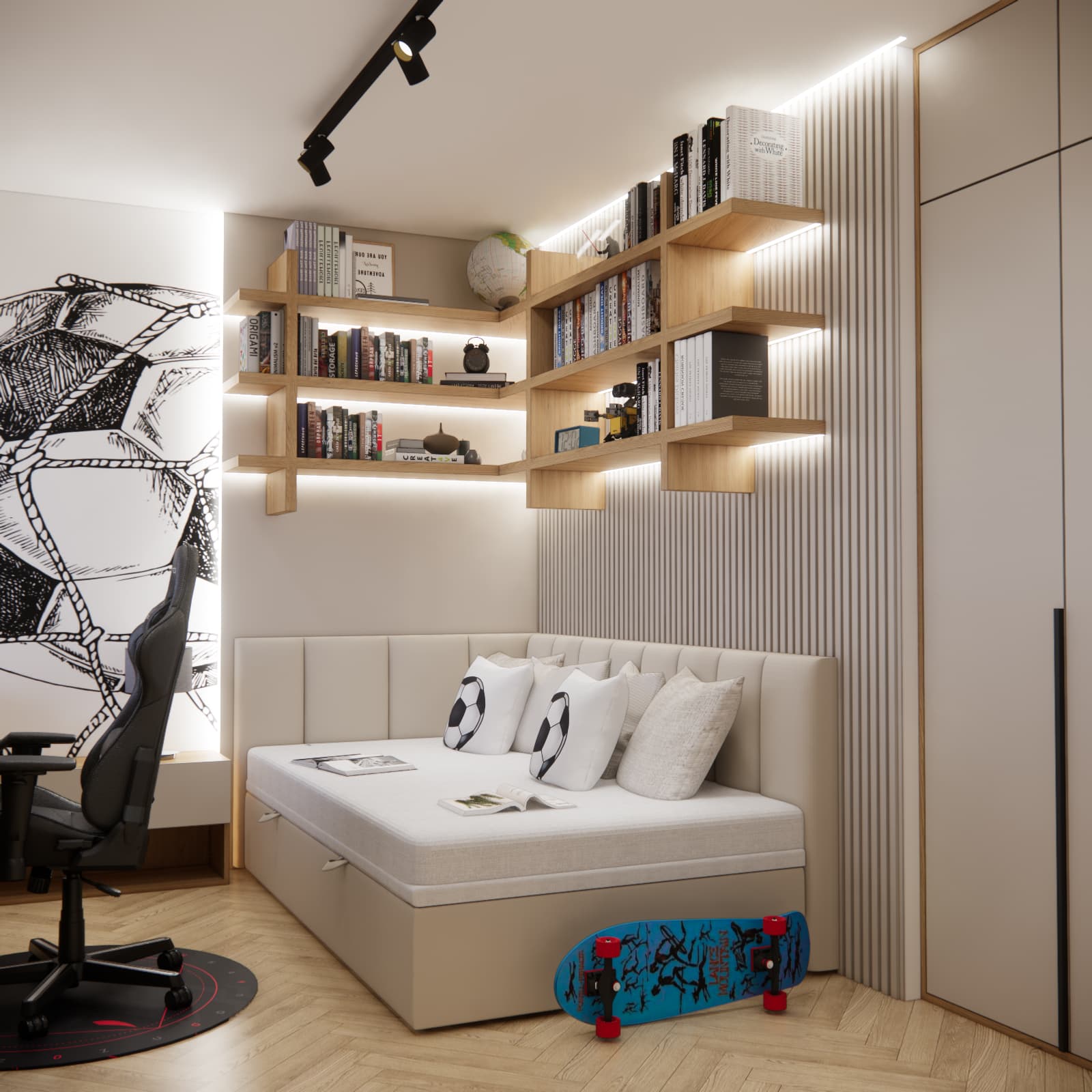
6. A minimalist relaxation zone with blue LED lighting
In a teenager’s room, the chillout zone can have a more modern character. Simple forms, light furniture, LED lighting, and a comfortable bed create a space suitable for an older child.
This is an example of an arrangement where lighting creates the atmosphere. Cooler LED tones give the interior a modern feel, while the soft bed and textiles balance the composition.
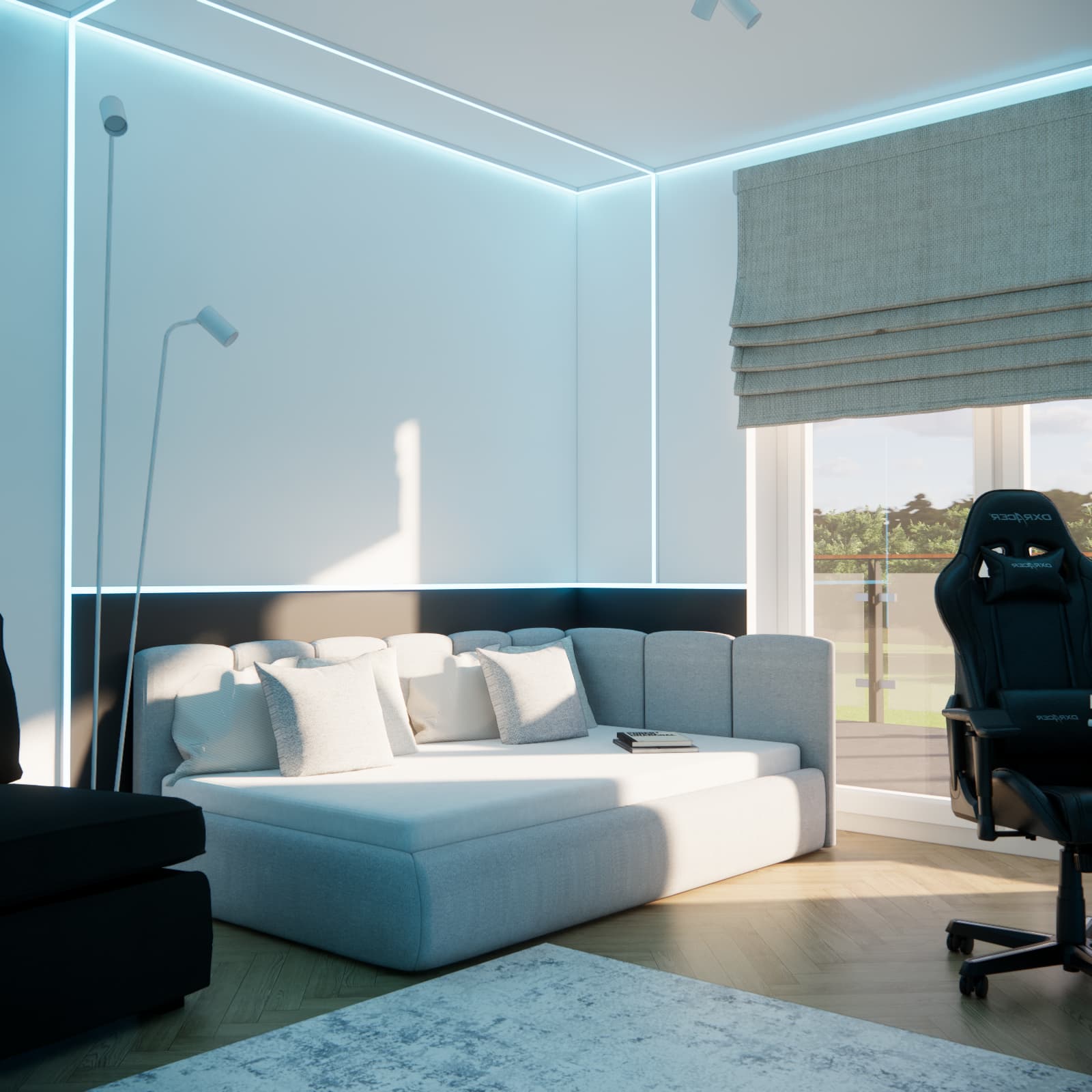
7. A sporty relaxation zone in a small room
A relaxation zone in a small child’s room should be carefully planned. In this project, the bed was integrated into a niche, while the sports-themed wall gave the interior character.
Thanks to this approach, the room does not need many decorations. One expressive motif, a comfortable bed, and good lighting are enough to create a functional relaxation zone for a child.
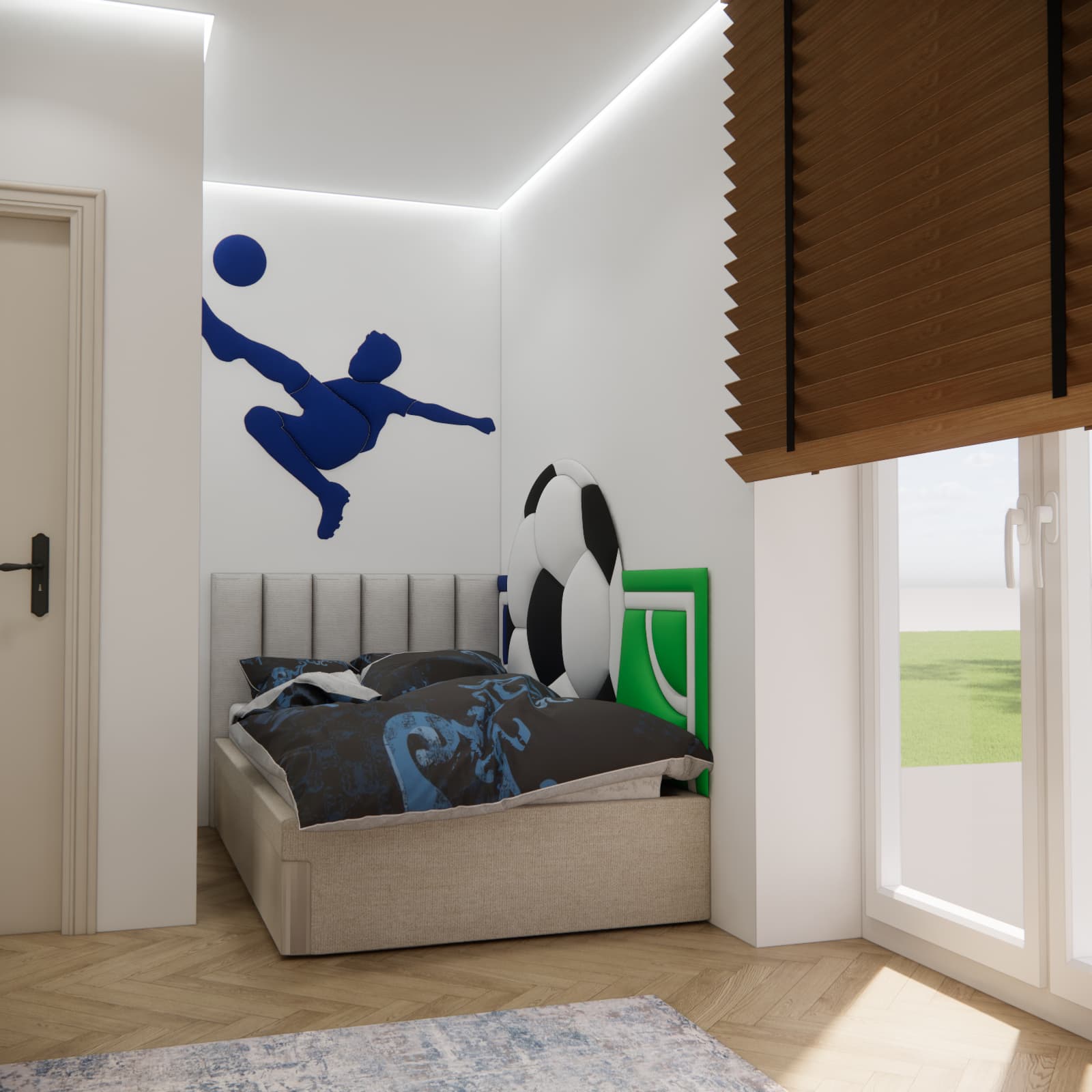
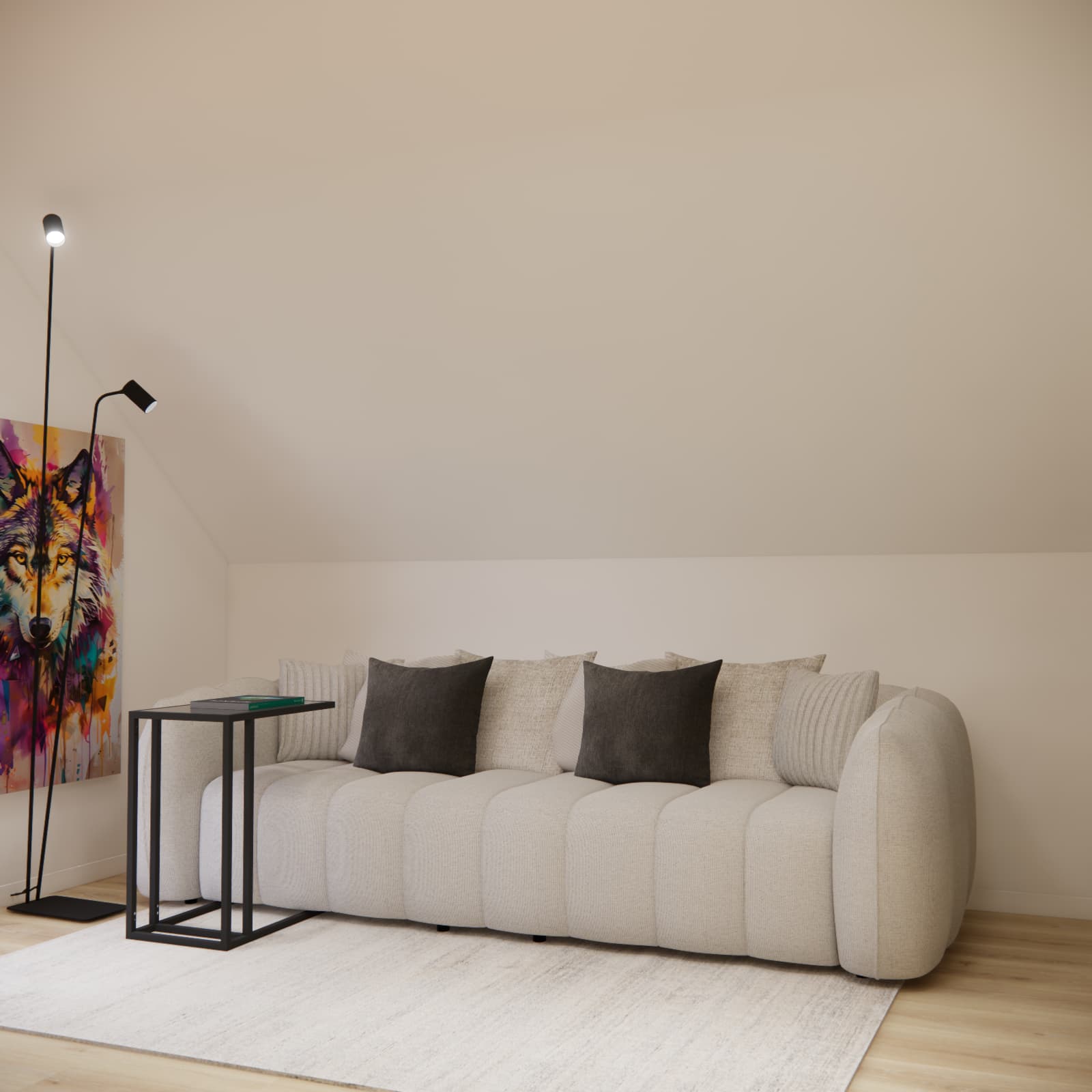
8. A calm sofa as a place to relax
A sofa for a child’s or teenager’s room works well when the interior also needs to function as a living area. It is a good solution for older children who want a place to relax, talk, read, or listen to music.
In this project, we combined a simple sofa with neutral colors, a soft rug, and decorative artwork. As a result, the interior feels calm without becoming boring.
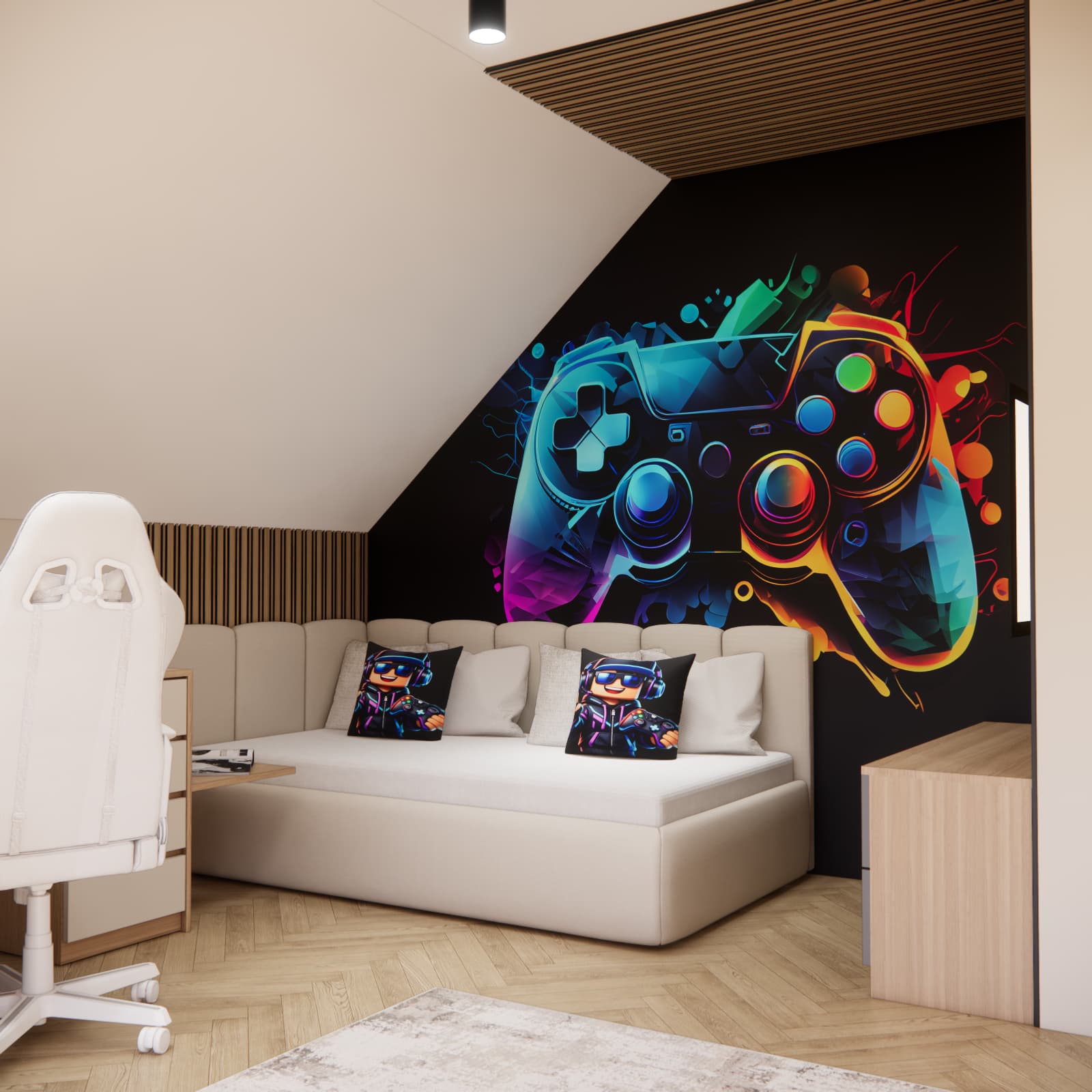
9. A gaming relaxation zone for a teenager
A chillout zone in a teenager’s room can have a stronger visual character. In a gaming-inspired project, darker accents, wall graphics, a comfortable bed, and a gaming chair work particularly well.
The key is balance. Strong graphic motifs are best combined with simple built-in furniture and neutral textiles so the room does not become visually overwhelming.
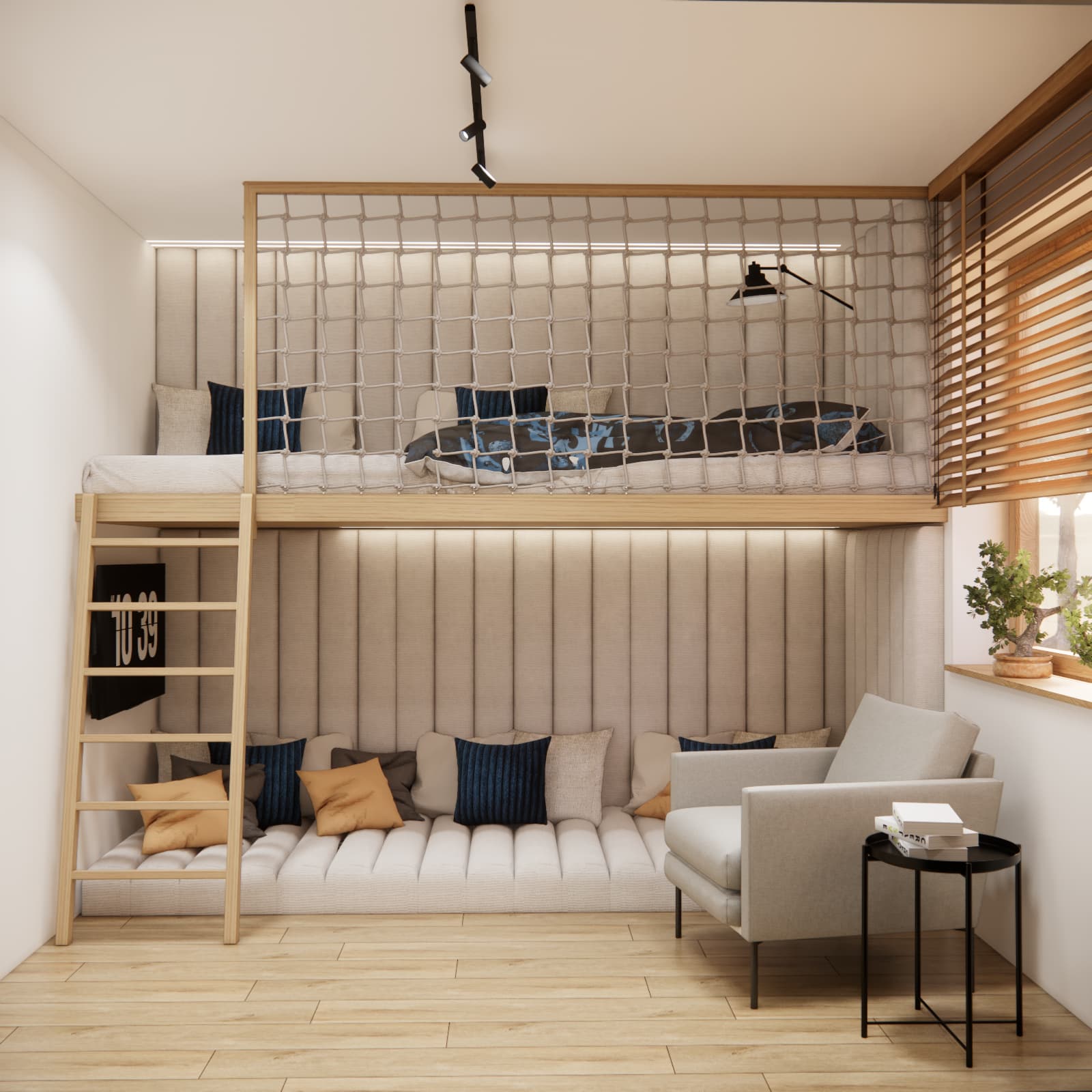
10. A mezzanine as a multifunctional relaxation zone
In high-ceiling rooms, a mezzanine works extremely well. It allows the sleeping area to be separated from the lower relaxation zone and creates an interior that gives the child more freedom.
This solution works especially well in rooms where we want to combine a bed, seating area, reading space, and additional play area. Soft panels, cushions, and protective netting create coziness and a sense of safety.
Which elements work best in a relaxation zone?
Soft seating for a child
This can be a bed, sofa, armchair, pouf, or bean bag chair. The most important thing is that the seating is comfortable and adapted to the child’s age.
Rug for the relaxation zone
A rug makes the interior feel warmer, reduces noise, and provides additional space for play. Soft, pleasant-to-touch models work best in relaxation areas.
Decorative pillows for a child’s room
Pillows help quickly change the character of an interior. It is worth matching them to the overall color palette to avoid visual chaos.
Ambient lighting
LED strips, wall lamps, and reading lights create a much better atmosphere than one central light source. Warm and diffused lighting works particularly well in relaxation areas.
Design example — how do we work on a room with a relaxation zone?
When designing a child’s room, we always start with functionality. We analyze the size of the room, window layout, and the placement of the bed, desk, wardrobe, and storage. Only then do we look for the best place for the relaxation zone.
In one project for a boy, it was important to combine sleeping, relaxing, and sports interests. Instead of adding an extra sofa, we designed a comfortable bed with an upholstered backrest, an illuminated wall, and football-themed decorations. As a result, the room gained character while remaining functional.
In another interior for a younger child, we focused on dinosaur wallpaper and a soft bed. This solution made it possible to create both a relaxation and play area without overcrowding the room with furniture.
Checklist before designing a relaxation zone
- Does the child have a comfortable place to sit or lie down?
- Is the relaxation zone separated from the desk area?
- Is the lighting soft and comfortable for the eyes?
- Are there pleasant-to-touch fabrics in the room?
- Does the color palette promote relaxation?
- Are the furniture pieces suited to the room size?
- Will the interior remain functional in a few years?
- Does the child have space for books, toys, or hobbies?
FAQ
How do you design a relaxation zone in a child’s room?
The best way is to start with choosing a comfortable place for sitting or lying down. It can be a bed, sofa, armchair, pouf, or window seat. Then it is worth adding soft textiles, a rug, and ambient lighting.
How can you create a cozy corner in a small child’s room?
In a small room, it is best to use the bed as the relaxation zone. An upholstered headboard, pillows, and shelves above the bed help create a comfortable space without taking up additional room.
What works better: a sofa or a bed?
In smaller rooms, we usually recommend a bed that also functions as a sofa. In larger interiors, you can add a separate sofa, armchair, or bean bag.
Should a child’s relaxation zone be colorful?
Not always. Calm colors combined with one stronger accent often work better. This makes the room feel cozy without overwhelming the child.
What lighting should you choose for a relaxation area?
Indirect lighting works best: LED strips, wall lamps, bedside lamps, and reading lights. It is worth avoiding overly strong and cold lighting in relaxation spaces.
Is it worth ordering an online child’s room design?
Yes, especially if the room is small or needs to combine several functions. A professional design helps properly plan the layout, storage, lighting, and relaxation zone.
Summary
The relaxation zone in a child’s room is one of those elements that truly affects everyday comfort. It does not have to be large or expensive. The most important thing is that it is comfortable, cozy, and adapted to the child’s age and personality.
In our projects, we most often focus on soft beds, upholstered walls, natural materials, good lighting, and multifunctional solutions. As a result, we create children’s rooms with relaxation areas that are aesthetic, practical, and ready for everyday use.
If you are planning a functional and cozy child’s room interior design, it is worth considering the entire layout already at the concept stage. You can also explore our comfortable spaces for children and check out our teenager room interior design for older children and teens.
About us — Fabryka Projektów
Fabryka Projektów creates online interior design projects for clients throughout Poland. We design children’s rooms, teenager rooms, apartments, houses, and individual interiors, combining aesthetics with everyday functionality.
In our work, we focus on thoughtful layouts, user comfort, adapting the design to the needs of household members, and visualizations that allow clients to see the final effect before implementation.